

Showing posts with label TTB. Show all posts
Showing posts with label TTB. Show all posts
Monday, March 6, 2017
Why Doesn't Four Roses Follow the Labeling Rules?
Four Roses is one of the most beloved distilleries among whiskey fans, and the annual Limited Edition Small Batch is probably their most prized release, but they have consistently ignored labeling rules for that release.
Last week, Four Roses cleared a label for this year's Limited Edition Small Batch. The label states that the bourbon is composed of a blend of four of their bourbons: 12 year old OBSF, 13 year old OESV, 15 year old OBSK and 23 year old OBSV. The problem is that they don't state the percentage of each bourbon in the blend.
Under TTB regulations, the age statement for a whiskey should be the age of the youngest whiskey in the blend. The TTB guidelines allow that a whiskey that is a blend of different aged components can list those components, but in doing so, it must also include the percentage of each component in the blend.
Most whiskey geeks like having more information and are happy to know the components of the Four Roses Small Batch, so what's the problem? Well, take this year's label for example. The big news here is that it includes a 23 year old bourbon. That's the oldest bourbon I've ever seen in any Four Roses bottle which is pretty exciting, but since we don't know the percentages, there could literally be a thimble full of 23 year old in the entire vatting. The purpose of the percentage requirement is to prevent companies from advertising the use of more aged whiskey without disclosing exactly how much old whiskey is in the mix.
Pursuant to the rules, Four Roses should either publish the percentage of each bourbon that went into the Small Batch or call it a 12 year old whiskey.


Wednesday, July 1, 2015
Whiskey Law: Distilled from Mash
Under the United States federal regulations defining classes of spirits, bourbon, rye whiskey, malt whiskey and wheat whiskey must be stored in charred new oak containers. But what happens if you make what would be a bourbon or a rye and store it in used barrels? Then it becomes a different type of whiskey, known as a "whiskey distilled from bourbon (or rye, or wheat or malt) mash."
Under the TTB regulations, whiskey distilled from bourbon (or rye, or wheat or malt) mash is defined as "whisky produced in the United States at not exceeding 160° proof from a fermented mash of not less than 51 percent corn, rye, wheat, malted barley, or malted rye grain, respectively, and stored in used oak containers; and also includes mixtures of such whiskies of the same type." 27 CFR § 5.22(b)(2).
Sounds simple enough: if you age it in new, charred barrels, it's bourbon; if you age it in used barrels, it's whiskey distilled from a bourbon mash. However, there is one additional complication: corn whiskey. Corn whiskey is a whiskey made from a mash of at least 80% corn that is unaged or aged in used or uncharred barrels, so a bourbon mash that is 80% corn and aged in used barrels would potentially qualify as both corn whiskey and whiskey distilled from bourbon mash. The regulations address this by stating that "Whisky conforming to the standard of identity for corn whisky must be designated corn whisky." 27 CFR § 5.22(b)(2).
To summarize, a whiskey composed of at least 51% rye, wheat or malt whiskey aged in used barrels is a "whiskey distilled from (rye, wheat or malt) mash." A whiskey composed of at least 51% but less than 80% corn and aged in used barrels is a "whiskey distilled from bourbon mash," and a whiskey composed of at least 80% corn and aged in used barrels is a corn whiskey.
Got it?
Saturday, January 17, 2015
How Old Are You Now? - TTB Clarifies Age Statement Rule
Along with violations of the state of distillation rule, one of my whiskey label pet peeves is the use of maximum age statements, that is, age statements that say "less than __ years old." The TTB regulations state that whiskey that is less than four years old must include an age statement that reads "___ years old." (27 CFR § 5.40(a)). Recently, though, "less than __ years old" age statements have been slipping through, particularly on sourced and craft whiskeys. I find this annoying because it renders the age statement meaningless. Sure, it's less than two or four years old, but how much less? One year? Six months? A week?
Yesterday, the TTB issued a new FAQ on age statements (see section S11) which makes it clear that maximum age statements are not acceptable:
Can the age statement include minimum or maximum ages?
As noted above, age may be understated, but may not be overstated. A minimum age (such as "aged at least __ years") is acceptable, but a maximum age (such as "aged for less than ___ years") is not acceptable.
It's great to see the TTB clarify this issue. Hopefully, this marks the end of two month old whiskey labeled "Less than four years old." Score one for the TTB and the whiskey consumer!
Monday, July 21, 2014
Brandy Law
I've spent a lot of time (and I mean a silly amount of time) reviewing and discussing the TTB's whiskey regulations, and I've also posted about the regional requirements for Cognac and Armagnac, but I've never delved into the American regulations covering brandy, which include some interesting stuff, so here's a summary.
Brandy is defined by American regulations as "an alcoholic distillate from the fermented juice, mash, or wine of fruit, or from the residue thereof." Like whiskey, it must be produced at less than 190 proof and bottled at a minimum of 80 proof. 27 CFR § 5.22 (d).
If the brandy is made from grapes it is "grape brandy" or just "brandy." If it's an aged brandy that's aged in oak for less than two years, it has to be labeled "immature." brandy (I'd sort of like to see that one apply to whiskey). 27 CFR § 5.22 (d)(1).
A brandy made from one type of fruit other than grapes must be labeled with the name of the fruit (e.g. "peach brandy"), except that apple brandy can be called "applejack." If a fruit brandy is made with more than one type of fruit, then it's "fruit brandy," but must also include "a truthful and adequate statement of composition." 27 CFR § 5.22 (d)(1).
Those are the basics, but there are lots of other brandy types that are defined, including dried fruit brandy, lees brandy, pomace brandy and many more, but those are fairly obscure categories. My favorite is "substandard brandy" which includes "any brandy which has been distilled from unsound, moldy, diseased, or decomposed juice, mash, wine, lees, pomace, or residue." Yum!
While there are lots of different brandies, the regulations for it are much looser than whiskey. For instance, brandy can include caramel coloring and treatment with oak chips (a common additive) without disclosing it on the label. 27 CFR § 5.39.
That's a starter for you. I will delve into the regulations in more detail in the future.
Monday, May 19, 2014
How do You Know It's Sourced Whiskey?
Every week, I look at the TTB's latest label approvals and see new whiskeys from new companies. For the purposes of adding them to my Complete List of American Whiskey Distilleries and Brands, I try to discern if the company that made the product actually distilled it or sourced it from elsewhere. A few years ago, this was a lot easier because the TTB regulations require that the state of distillation be listed right on the label. If a Nebraska company was selling Kentucky bourbon, they had to say so. Unfortunately, that rule seems to have gone out the window, though some valiant souls are trying to change that.
Since you can't rely on the state of distillation rule, how can you tell if a whiskey is sourced? Well, it's not always easy, but there are a few important clues.
- Does the label say "produced by" or "distilled by?" While the TTB may not be enforcing the state of distillation rule, there is another rule that regulates how whiskey production is described on the label. "Distilled by" means just that, whereas "produced by" means the whiskey was bottled by another party than the distiller (there are other terms that can be used as well, but those two are the most common). This should be the end of the inquiry, but companies do make mistakes. Usually the mistake is actually the distiller using "produced by" as opposed to a bottler using "distilled by" but it goes both ways. Despite the occasional erroneous label, I give the benefit of the doubt to the label statement. If it says "distilled by," it probably is; if it says "produced by," it's probably sourced, but the inquiry doesn't stop there.
- Compare labels. For companies that make multiple spirits, I also look at the labels for their other products. If they used "distilled by" on a vodka and "produced by" on a whiskey, then they obviously know the difference, and they didn't distill the whiskey.
- Look at the timeline. If a distillery opened last year and they are selling a ten year old whiskey, it's sourced. This is surprisingly common.
- Look at the mashbill. Using a 95% rye mashbill is a dead giveaway that it was distilled at MGP in Indiana. Sure, it's possible that a craft distillery could use the same mashbill, but MGP produces a huge amount of 95% rye and sells it all to other companies, so when I see the 95% rye figure, I know it's most likely sourced from MGP.
- Unusual grains. On the flip side, if the mashbill contains unusual grain combinations, you're probably not looking at a sourced whiskey. Very few big producers are doing much work with spelt, millet or oats. That being said, there are some craft distilleries that have sold their whiskey to other companies, so while sourcing is still a possibility, it's much less likely.
Finding out if a whiskey is sourced when the producer doesn't want you to know is particularly tricky, so here are some things to watch out for in those cases. None of these are good evidence of distilling.
- They have a still. One guy wrote me an angry email saying that a bourbon I had listed as sourced couldn't have been because he saw a picture of the owner in front of his still. News flash: just because a company has a picture of a still on their website doesn't mean it's their still, and even if it is, that doesn't mean they are actually using it, and even if they are using it, that doesn't mean the whiskey they sell isn't sourced. There are a number of distilleries that distill their own spirits while also selling sourced whiskey.
- They talk about distilling. When you're perusing company websites, you have to read like a lawyer reads a deposition...very precisely. It's easy to say a lot about the distilling process, the grains and water used and barrel aging without ever saying that you actually distilled the whiskey. Similarly, be careful about local newspapers that say the product is distilled by a local company. Most local reporters covering the new distillery in town don't know the first thing about whiskey, and the difference between a distilled and sourced whiskey is going to pass right over them. If there isn't a direct quote from the producer saying they distilled the whiskey, take it with a grain of salt.
- The liquor store guy/bartender/sales rep. said they distill it themselves on their farm in South Dakota. If you're reading this blog right now, you probably know more about whiskey than 95% of the salespeople out there. Sure there are exceptions, and the ones who know their stuff can have valuable information, but most of them aren't reliable sources of information about distillery specifics, plus they're trying to sell you something.
That being said, in some cases this is very difficult to figure out, and none of these methods are foolproof. Despite flaws in the label approval process, labels are still one of the most reliable sources since the information on a label is more heavily regulated and requires federal government approval, while the information on a website or press release does not.
I also want to stress that while there certainly are some charlatans out there, most whiskey companies I've had contact with, particularly the newer and smaller ones, are honest and well intentioned. I've had a number of producers email me with information for the list, including information about sourcing, and many are more than willing to answer questions.
So if you ever see a whiskey on my list and wonder, "How does Sku know this was sourced?"...now you know.
Wednesday, March 5, 2014
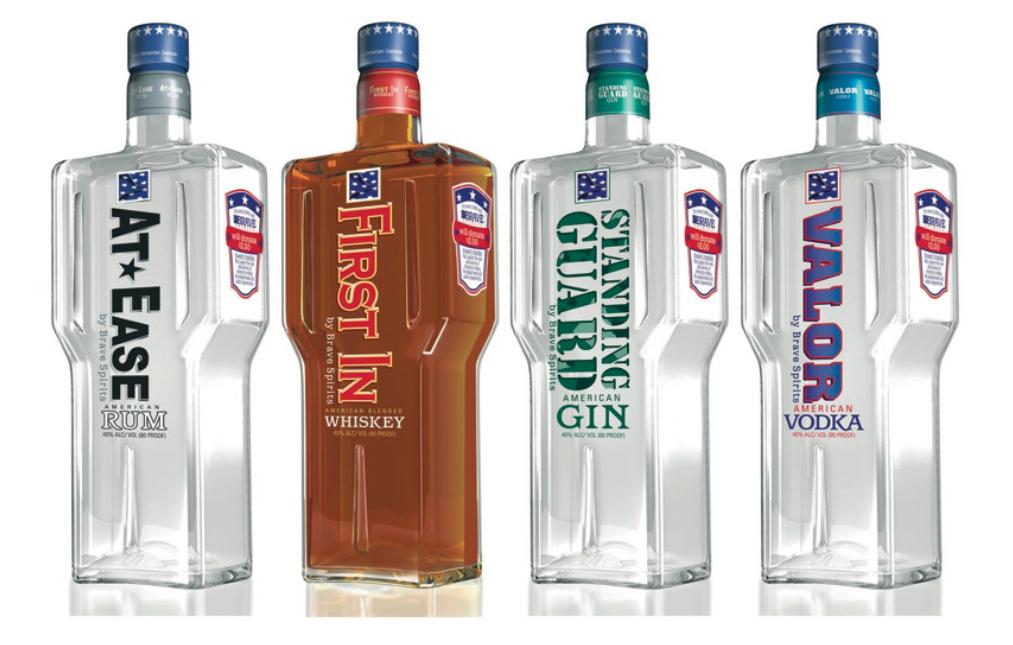
Weird Whiskey Regulations: The No Flag Rule
File this under the weird rules department. Did you know that according to 27 CFR 5.42(b)(7) of the TTB regulations for distilled spirits:
Labels shall not contain any statement, design, device, or pictorial representation which the appropriate TTB officer finds relates to, or is capable of being construed as relating to, the armed forces of the United States, or the American flag, or any emblem, seal, insignia, or decoration associated with such flag or armed forces;The only TTB ruling I found dealing with this provision involved a retailer who wanted to put stickers on bottles "bearing the slogan 'Fight Communism' and pictures of the Statue of Liberty and of the American flag with its staff transfixing a bleeding serpent." Classy! The TTB nixed the flag but said the rest of it was good to go, so I guess bleeding serpents are okay.
Of course, as with most rules, the TTB seems pretty lax about it these days, letting at least a few flags and military themes slip through.
Sunday, April 28, 2013
Spoiler Alert: Fall Whiskeys Revealed
Fall is the big whiskey season when all the special release whiskeys come out, but because of the TTB label approval process, we get a preview of them in spring and summer. Here are some of what awaits us this fall (other than Zachory Boone):
- Four Roses Limited Edition Small Batch. Last years Four Roses Limited Edition Small Batch Bourbon was one of the best bourbons of the year. This year's will be composed of 18 year old OBSV, 13 year old OBSK and 13 year old OESK, the same recipes in last year's edition but at different ages.
- Woodford Reserve Master's Collection. It looks like this year's Woodford Master's Collection will be a repeat of the Woodford Rye Whiskey experiment of two years ago, except with barley malt. There will be a single malt whiskey aged in used barrels in the Scotch style and a straight malt with corn as a secondary grain aged in new charred oak in the American style.
- Masterson's. 35 Maple, the bottler of Masterson's Rye will be importing a 12 year old straight wheat whiskey and a ten year old straight barley whiskey from Canada.
- Redbreast 21. A 21 year old version of Redbreast Single Pot Still Irish Whiskey.
Thursday, April 11, 2013
Uncovering Sourced Whiskey: Produced, Made, Bottled or Distilled?
One of my pet peeves is companies that bottle whiskey they bought from elsewhere and pretend they made it themselves. There is a TTB regulation that requires whiskey to include the state of distillation on the bottle. That used to be a good way to tell if something was sourced. Even if an Idaho company was bottling the whiskey, it would have to say that it was distilled in Kentucky or Indiana. Unfortunately, as I pointed out last fall, the TTB does not seem to be enforcing that rule. So now, how can we tell if a whiskey is sourced?
One of the key things to look at is the wording on the label. Under the TTB regulations, only someone who distilled the whiskey can use the term "distilled by" to identify the source of the whiskey. The terms "made by" or "produced by" mean that the whiskey was made by a rectifier (i.e., someone who did not distill it). The problem is that instead of using any of these terms, the term "bottled by" can be used by distillers or rectifiers.
To summarize, if you see the term "distilled by" on the label, you know that the company actually distilled the whiskey, and if you see "produced by" or "made by", you know they did not. If you only see "bottled by," it could go either way. Even so, my new rule of thumb is that if the label doesn't say "distilled by", it's sourced.
So look for the D word on that new brand of whiskey. If you don't see it, chances are they didn't make it.
Friday, October 26, 2012
Trolling the TTB
As I've written before the Federal Alcohol & Tobacco Tax and Trade Bureau (TTB) approves all spirits labels and publishes the certificates of approval on-line. This is a huge service to spirits fans as we get to see labels for new products long before they are on the shelf. Whiskey geek that I am, I spend some of my free time trolling the TTB database to see what's new and noteworthy. If I find something good, I usually tweet a link to using the hashtag #ttbtrolling, so if you want to see what's new that I've found interesting, search that hashtag.
Now keep in mind that label approvals don't guarantee that the product will hit the market. Sometimes, a company submits a label to have a product ready but then decides not to go forward or changes it for one reason or another. They also approve labels that are for private distribution for a particular event or store but which may not be widely available, so if you see me tweet an interesting label, understand that it's likely but not guaranteed to end up on the shelf.
Here are some of my recent finds:
- Jim Beam brings back its Distiller's Masterpiece series of a decade ago with a sherry finished bourbon
- Glenmorangie adds Ealanta to its Private Edition, vintage 1993 and aged in new, charred oak like a bourbon
- Old Forester brings out a single barrel BIB
- Bunnahabhain 40
- Bulleit 10 year old
- And for all you whiskey purists: Chicken Cock Root Beer Flavored Whiskey
I bet you never thought government documents could be so much fun!
Tuesday, September 4, 2012
Why isn't the TTB Enforcing the State of Distillation Disclosure Rule?
Last year, I posted about the federal regulation that requires most whiskey labels to list the state in which the whiskey was distilled. To summarize, The federal regulations of the Alcohol and Tobacco Tax and Trade Bureau (TTB) require that whiskey labels disclose the state where the whiskey was distilled. If the whiskey is distilled in the state where the company is located, then the address of the company is sufficient to comply with this requirement. However, if the business address is not in the state where the whiskey was distilled, the state has to be stated separately on the label. (There are some limited exceptions to this regulation, but it applies to most whiskey). See 27 CFR § 5.36(d).
However, it has recently come to my attention that the TTB does not seem to be enforcing this rule. I know of several LDI distilled whiskeys which don't have the word Indiana anywhere on the label. In such cases, the label typically says "bottled in..." the state in which the company is headquartered but does not designate the state of distillation in either the address or otherwise on the label.
This is a big deal. In the world of American whiskey, it's hard enough to figure out which whiskeys are produced by whom even when the state of distillation is clear. Labels are rife with fake distillery names, bottlers of sourced whiskey who imply that they distilled it themselves and other chicanery. At least the state of distillation rule told you if a local company was actually selling Kentucky bourbon, and in the case of LDI, it was especially helpful since the "produced in Indiana" line almost always pointed to LDI.
I've sent the TTB an email asking what their policy is on enforcing this rule. I'm not hopeful, but if I hear back, I'll let everyone know what they say.
Subscribe to:
Posts (Atom)