

Showing posts with label Bourbon. Show all posts
Showing posts with label Bourbon. Show all posts
Monday, April 10, 2017
Better Late Than Never: Four Roses 2016 Limited Edition Small Batch
It's harder and harder to get these bottles, so thanks to My Annoying Opinions for sending me a sample of the 2016 edition of the Four Roses Limited Edition Small Batch was released last fall and sold out pretty much immediately.
The 2016 Small Batch Limited edition was a blend of 12 year old OESO, 12 year old OBSV and 16 year old OESK
Four Roses Small Batch Limited Edition 2016, 55.6% abv ($1 Bajillion)
The nose is nice with bourbon caramel notes. The palate comes on sweet, then picks up woody notes and develops a chewy mouthfeel. It feels hot for its strength. The finish is dry with peppery notes and then a very slight mint. Water makes it soapy so I'd stay away from the faucet.
This is a very nice bourbon, in the traditional "old bourbon" style with a lot of oak showing through. Taking it side by side with the 2015, they are pretty similar. The 2015 may have had more complex flavors but the 2016 is more balanced between the oak and sweeetness. Still, none of them stand up to the amazing bottlings of 2012 and 2013. Those are the bottlings that made the Small Batch Limited Edition a cult must-have bourbon, but the more years pass, the more they seem like an aberration. The more recent releases have certainly been very good, but not amazing.
Also see MAO's annoying opinion on this bourbon.


Wednesday, March 29, 2017
The New Craft BIBs
Just a few years ago, it looked like the category of bonded whiskey was on its way out. In 2013, I made a list of all of the bottled in bond whiskeys available and could only identify 18, more than half from Heaven Hill and many of which were regional releases that weren't widely available. Only one of them, Anchor's Old Potrero, was from a craft producer.
Well, like many other things, craft whiskey seems to have brought back the bottled in bond category. Over the last couple of years, there has been a huge boom in new BIB whiskeys from craft producers, as well as more products from the big boys like Brown Forman and Beam. Here is a list of BIBs from the new distilleries that have either been released or cleared labels:
A.D. Laws Four Grain Bourbon
Dad's Hat Rye (Mountain Laurel Spirits)
Few Bourbon & Single Malt
Kings County Distillery Bourbon
Leopold Brothers Maryland Style Rye
North American Steamship Rye (Quincy Street Distillery)
Old Maysville Club Rye (Old Pogue)
Oregon Spirit Distillers Bourbon, Rye and Wheat Whiskey
Outryder American Whiskey (Wyoming Whiskey)
Peerless Rye (Kentucky Peerless)
Project No.l 1 Bourbon (Breuckelen Distilling)
Rocktown 5th Anniversary Bourbon
Tom's Foolery Bourbon, Rye & Corn Whiskey (as well as Applejack)
Wigle Rye (Pittsburgh Distilling)
Willett Bourbon
It's pretty impressive that in four years craft distillers have nearly doubled the number of BIB whiskeys on the market. If I've missed any, please let me know in the comments.
Wednesday, March 22, 2017
Burnside Bourbon

Burnside Bourbon is a four year old sourced straight bourbon bottled by Eastside Distilling in Portland, Oregon.
Burnside Bourbon, 4 yo, 48% abv ($25)
The nose is nice with plenty of spice and oak. The palate opens with spicy notes. It's quite dry and has a slight soapy note. The finish is spicy. Hmm. This tastes like MGP's high rye bourbon recipe.
This bourbon has a very nice nose and finish, but the palate is a bit flat. This is probably one I would use for cocktails.
Thanks to Eastside Distilling for the sample.
Monday, March 6, 2017
Why Doesn't Four Roses Follow the Labeling Rules?
Four Roses is one of the most beloved distilleries among whiskey fans, and the annual Limited Edition Small Batch is probably their most prized release, but they have consistently ignored labeling rules for that release.
Last week, Four Roses cleared a label for this year's Limited Edition Small Batch. The label states that the bourbon is composed of a blend of four of their bourbons: 12 year old OBSF, 13 year old OESV, 15 year old OBSK and 23 year old OBSV. The problem is that they don't state the percentage of each bourbon in the blend.
Under TTB regulations, the age statement for a whiskey should be the age of the youngest whiskey in the blend. The TTB guidelines allow that a whiskey that is a blend of different aged components can list those components, but in doing so, it must also include the percentage of each component in the blend.
Most whiskey geeks like having more information and are happy to know the components of the Four Roses Small Batch, so what's the problem? Well, take this year's label for example. The big news here is that it includes a 23 year old bourbon. That's the oldest bourbon I've ever seen in any Four Roses bottle which is pretty exciting, but since we don't know the percentages, there could literally be a thimble full of 23 year old in the entire vatting. The purpose of the percentage requirement is to prevent companies from advertising the use of more aged whiskey without disclosing exactly how much old whiskey is in the mix.
Pursuant to the rules, Four Roses should either publish the percentage of each bourbon that went into the Small Batch or call it a 12 year old whiskey.
Monday, February 27, 2017
Can you tell wheat from rye?
Over the past fifteen years, I've participated in hundreds of blind tastings and hosted my share as well. Tasting blind and watching others taste blind is a great experience and teaches you a huge amount about spirits and your own palate. There is one very surprising thing I've learned from blind tastings: almost no one can consistently differentiate between wheat and rye recipe bourbons.
Bourbon fans put a lot of stock in the mashbill, but I've done tasting with some incredibly experienced drinkers, and I don't think I've ever blind tasted with anyone who could consistently differentiate between wheat and rye recipe bourbons. Sure, some high rye bourbons are a giveaway and some people are very good at identifying particular distilleries, but even very experienced tasters often miss the mashbill in a large and varied blind tasting.
And I'm no different. I was once so convinced that a Bowman bourbon I had blind tasted was a wheater that I contacted Sazerac to ask - no dice. I was told it was rye recipe.
To me, this indicates that we may put too much stock in mashbill. There are many factors that contribute to bourbon flavor from yeast to cask and maybe mashbill content isn't as important as we think it is.
Can you tell wheat from rye?
Friday, February 24, 2017
New Belle Meade Single Barrels from K&L
 K&L purchased two barrels of 10 year old cask strength MGP bourbon from Nelson's Green Brier which bottles under the Belle Meade label. The two casks are made from different mashbills. Barrel 2573 is 75% corn, 21% rye, 4% malted barley while Barrel 2525 is 60% corn, 36% rye, 4% malted barley.
 Belle Meade Barrel 2573, 2006, 10 yo, 55.65% abv ($70)
The nose is spicy with some soft, sweet vanilla notes underneath. The palate is sweet with toffee, fading into a butterscotch finish with a slight herbal note. This is a sweet one, but it's a tasty bottle of dessert.
Belle Meade Barrel 2525, 2006, 10 yo, 59.6% abv ($70)
This one has a fantastic nose of old, polished wood and lemon rind. The nose actually reminds me of the nose on some of those old Bernheim wheaters that Willett put out ten years ago. The palate has a similar profile with wood spice, caramel and a dry, ashy mouth feel. The finish picks up a light, acidic berry note which balances nicely with the dry oak notes.
These are both good bourbons, but the 2525 is great. For only being ten years old, it has lots of old-bourbon notes. It's definitely among the best MGP bourbons I've tasted, up there with some of the best Smooth Ambler bottlings. Get it while you can!
Tuesday, February 21, 2017
Crowdsourced Whiskey: Old Forester 1920
 When I asked readers what affordable, available whiskey I should be drinking, the top answer, by far, was Old Forester 1920, so I had to give it a try. Traditionally, I have not been a fan of Brown Forman products, but I have enjoyed some of their recent releases in this series, so let's see how this one is.
Old Forester 1920, 57.5% abv ($60)
This has a really nice nose with polished wood, the type of nose you don't find on many current release bourbons. The palate starts rich, balanced and fairly dry. After that, it develops a strong, unpleasant acidic note which develops into a berry like finish.
Water is really good for this one. A few drops of water cuts the acidity and brings out spicy rye notes from nose to finish which complement the dry, woody notes and make for a really delicious drink. This is a really nice bourbon provided you add some water.
Thanks to all the readers who suggested this. A tasty, available, high proof bourbon for $60 is quite find these days.
Monday, February 6, 2017
2017 High West Bourye
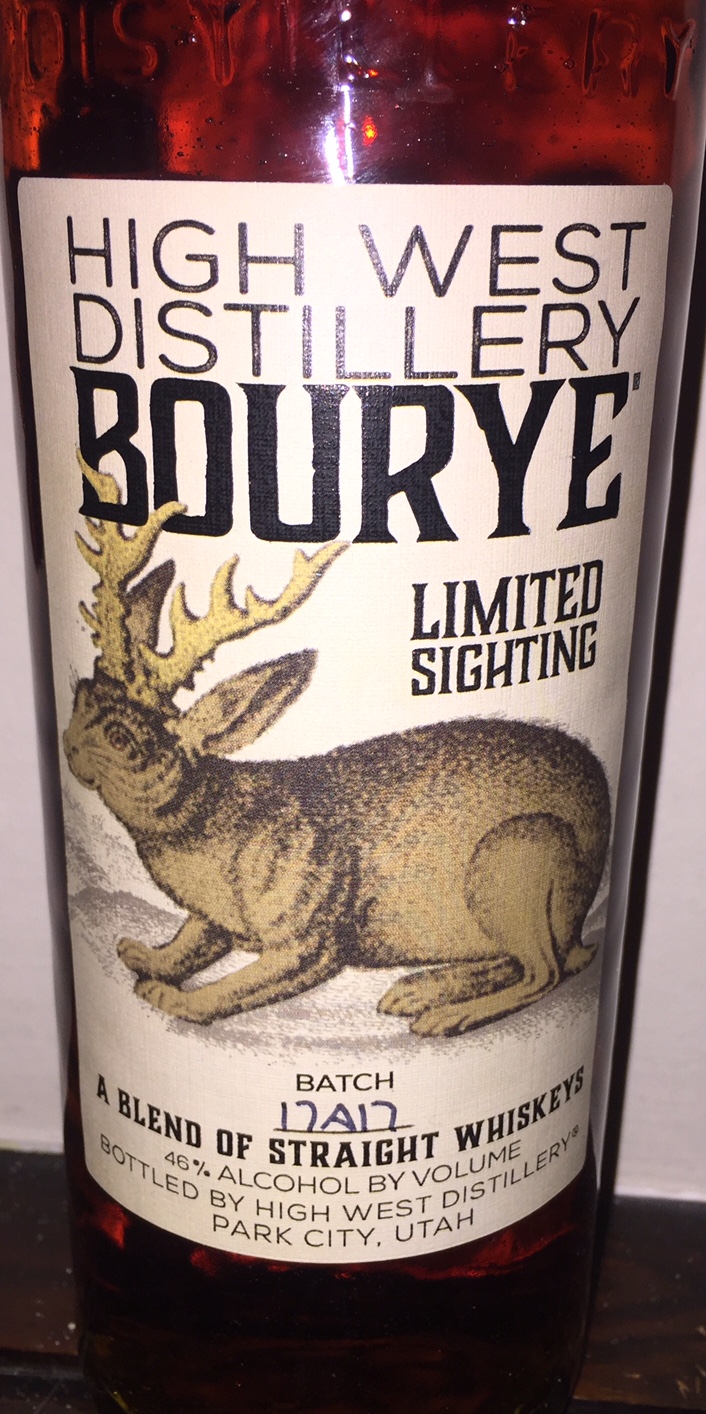 High West sent me the new batch of their Bourye bourbon/rye blend. This year's batch is a blend of MGP whiskeys aged 10 to 14 years old and is composed of a 75% corn/21% rye recipe bourbon the 95% rye.
High West Bourye, Batch 17A17, 46% abv. ($80)
The nose has oregano and spice. The palate opens with rye spice, then moves to bourbon sweetness. The finish is on the sweet side.
This is a very good whiskey with a nice balance of sweet and spice. Tasting it side by side with the 2016 Bourye, this one is a bit sweeter with more bourbon notes whereas the 2016 is spicier and more rye. I'd say I slightly prefer the 2016 but both are very good. Another good blend from High West.
Monday, October 17, 2016
Parker's Heritage Collection 2016
 This is the tenth year of Heaven Hill's Parker's Heritage Collection (If you don't know the history, I recently recapped all of the Parker's Heritage Collection bottlings). This year's bottling is a 24 year old bottled in bond bourbon distilled at the pre-fire Heaven Hill distillery in Bardstown, Kentucky.
There are two releases of this year's bourbon: one was distilled in the Fall 1990 and the other in the Spring of 1991. I will be tasting the Fall 1990 release.
Parker's Heritage Collection 2016, 24 years old, 50% abv ($250)
The nose starts with light caramel and honey, Evan Williams like, and then develops nice oaky/leather notes. The palate comes on strong and oaky with a nice caramel in the back. The finish is strongly bitter.
The nose and palate on this bourbon are very strong and hearken back to the good old days of Parker's. The only flaw is in the finish which is too bitter. The good news is that even with the bitter finish, this is tasty stuff and the best Parker's Heritage release in years. The bad news is the price.
Thanks to Chris Dion for the sample.
Monday, September 26, 2016
Fred Minnick's Newest Bourbon Book
 Fred Minnick is one of the most prolific writers in whiskey. This fall, he will be releasing his third whiskey book since 2013 (his previous books were Whiskey Women and Bourbon Curious). His newest volume is an historical overview of bourbon.
Bourbon: The Rise, Fall, and Rebirth of an American Whiskey, traces the history of bourbon from its earliest days to the present. Minnick adds some new speculation as to who might have "invented" bourbon, saying that he believes a Bourbon County, Kentucky distiller named Jacob Spears was the "true father of bourbon," though the evidence, as Minnick describes it, seems far from definitive.
There are a number of bourbon histories out there by respected writers such as Michael Veach and Chuck Cowdery. What makes Minnick's book different though is that while Veach and Cowdery tend to focus on distilleries and bourbon brands, Minnick's new books is really a history of the regulation of bourbon. Each chapter focuses on the different ways that U.S. has affected bourbon production and the bourbon industry. Minnick fills an important gap here, for while there are many books that deal with Prohibition, I'm not aware of any other book that comprehensively examines the history of alcohol regulation in the way that Minnick's does. He looks in depth at wartime prohibition, anti-trust investigations, tariffs and the various laws and regulations that have defined what bourbon is and how it can be made. The downside of this focus is that it can be a bit dry (pun intended). I found myself very interested in the various laws that defined bourbon but less so in the tariffs.
Minnick's discussion of more recent times veers more into information about brands and consumer habits, and he unearths some interesting stories like his anecdote about Brown-Forman's ill fated Frost 8/80 from the late '60s. Frost was a Pennsylvania bourbon that had the color filtered out of it to compete with vodka. It was so poorly received that Brown Forman issued a national recall, buried the bottles in a landfill and banned the word "Frost" on company property.
Bourbon: The Rise, Fall, and Rebirth of an American Whiskey in an important addition to American whiskey literature, and it's worth a read for anyone interested in bourbon's complex regulatory history.
Bourbon: The Rise, Fall, and Rebirth of an American Whiskey
Voyageur Press ($15)
Publishes October 1, 2016
Thanks to Zenith Press for the review copy.
Wednesday, August 31, 2016
The Anti-Booker's: 1792 Full Proof
 As far as I recall, the new 1792 Full Proof is the highest proof offering from Sazerac's Barton distillery in Bardstown. It's non-age stated, but Sazerac says it is 8 1/2 years old.
1792 Full Proof, 62.5% abv ($40)
The nose has light bourbon notes with some banana. On the palate it opens sweet with caramel notes, then develops some red wine like savory notes and some nice oak. It fades into a pleasing roasted marshmallow finish which is followed by dry oak notes. Water adds complexity, bringing out earthy, hay and grass notes as well as additional oak.
This is nice stuff. It's well balanced, has some complexity of flavor, and is fantastic for the price. Kudos to Sazerac for giving us a good, high proof bourbon that doesn't break the bank.
Ed. Note: In an earlier version of this post, I incorrectly stated that this bottling was cask strength, which it's not. "Full proof," as defined on the label is the proof that it went into the barrel (not the proof it came out of the barrel).
Thanks to FussyChicken for the sample.
Wednesday, August 10, 2016
More Craft Whiskey: Union Horse Bourbon & Rye

Today I'm tasting a bourbon and a rye. Both are straight whiskeys which is always good to see from craft producers (though still fairly rare). They seem to go for $50-$60 with the rye being slightly more expensive.
Union Horse Reserve Straight Bourbon, 2 years old, Batch 2, 46% abv
Union Horse uses a somewhat unique bourbon mashbill consisting of 80% corn and 20% rye. The oldest whiskeys used for this bourbon are five years old but the age statement is 2 years. The nose on this is grainy. The palate is tinny and a bit watery with vanilla notes. The finish is dry and grainy.
Union Horse Reunion Straight Rye, 2 years old, Batch 1, 46.5% abv
This is made from a 100% rye mashbill. It has a really nice nose with rye and some Charbay like hops notes. The palate has that tiny-grainy taste so typical of craft whiskey. The finish turns spicy but bitter. It's got a great nose, but it declines sharply after that.
For me, this is yet another craft whiskey that seems to be trying really hard and doing all of the right things on paper but still disappoints. Maybe it's the flavor of the pot stills or maybe this stuff is just too young, but these whiskeys taste like so many other grainy/tinny craft whiskeys. Check out The Whiskey Jug though, because he really liked both the Union Horse Bourbon and Reunion Rye.
Thanks to FleishmanHillard for the sample.
Monday, August 1, 2016
Ten Years of Parker's Heritage Collection
Last week, Heaven Hill cleared a label for the tenth release of its Parker's Heritage Collection, which will be a 24 year old bottled in bond bourbon. Given that it's now been around for a decade, I thought this would be a good time to look at the Collection as a whole over the years. For each bottling, I've included the original price.
First Edition (2007) Cask Strength Bourbon ($80): The very first release of Parker's was a high power bourbon. Composed of 68 barrels distilled in 1996, it was released in three batches at slightly different proofs (122.6, 127.4 & 129.6). This was a delicious monster of a bourbon (and as per the world of 2007, it sat on shelves for months). The 122.6 proof is still my favorite of the entire Parker's series.
Second Edition (2008) 27 Year Old Bourbon, 48% abv ($185): These days, we're used to bourbon aged well into its third decade, but back in '08, few bourbons pushed past the 20 year mark and this 27 year old was, by far, the oldest bourbon available when it came out. That being said, it's a rare bourbon that can hold up over 20 years, and this one had some musty, old woody notes. It was good but didn't reach the heights of the first release.
Third Edition (2009) Golden Anniversary, 50% abv ($150): In honor of Parker Beam's 50 years at Heaven Hill, the Third Edition of Parker's combined bourbons from each decade he was on the job going back to the 1960s. This one made waves for receiving the highest rating to date from Malt Advocate Magazine (now Whisky Advocate): 97 points. I liked it but wasn't quite that enthusiastic; I thought it was on the sweet side. (I'm not sure why I never wrote this one up on the blog but I did rate it for the LA Whiskey Society).
Fourth Edition (2010) 10 Year old Wheated Bourbon, 63.9% abv ($80): After a couple of years of high priced Parker's that I liked but didn't love, Heaven Hill dropped a cask strength ten year old wheated bourbon and lowered the price back down to $80. And it was great! It had a great balance of sweet, savory and oaky notes. This was particularly surprising since Heaven Hill's standard wheated bourbons were mostly an afterthought back then. This is my second favorite after the First Edition.
Fifth Edition (2011) Barrel Finished, 10 years old, 50% abv ($80): This was a ten year old bourbon finished for six months in Frapin Cognac casks. The Cognac really came through and made for a tasty, if not exceptional bourbon.
Sixth Edition (2012) Blend of Mashbills, 11 years old ($80): The sixth edition was a blend of rye and wheat recipe bourbons bottled at cask strength. Like the first edition, this one was released in three batches at three different abvs (65.8%, 68.95% & 69.7%). This bourbon managed to capture the good elements of both mashbills and was a solid bourbon. This was probably the last of the very good to great Parker's Heritage Collection whiskeys. After 2012, the series really went into decline.
Seventh Edition (2013) Promise of Hope, 10 years old, 48% abv ($90): In 2013, Parker Beam, the Heaven Hill Master Distiller who the Heritage Collection was named for, announced that he had ALS. The Promise of Hope bottling helped raise awareness of ALS, and for every bottle sold, $20 went to ALS research. This was a ten year old, single barrel, rye recipe bourbon; 100 barrels were released. It was a noble cause to be sure, but while it was a decent bourbon, dry with a chaotic palate, it wasn't great.
Eighth Edition (2014) Wheat Whiskey, 13 years old ($90). For years, Heaven Hill was the only major distillery that produced a straight wheat whiskey (Bernheim Wheat), so it made sense that they would use one in a Parker's Release. This one had two batches at different abvs: 63.4% and 63.7%. I thought the 63.7% was decent for a wheat whiskey, but I found the 63.4% to be a sour and acidic mess. Most others didn't see much of a difference between the two.
Ninth Edition (2015) Malt Whiskey, 8 years old, 54% abv ($100). This was a pretty surprising release. Who even knew that Heaven Hill had made malt whiskey, but here it was, and it was pretty bad. I found it soapy and cardboardy with no complexity. Definitely my least favorite of the entire series.
Will this year's 24 year old return the Parker's Heritage Collection to its past glory? Will it set a record for pricing of the series? Will anyone be able to find it? Will Heaven Hill ever appease the whiskey geeks who have been pining for a 10 year old cask strength rye or a really old corn whiskey? Time will tell.
ADDENDUM (To keep the list complete)
Tenth Edition (2016) 24 Year Old BIB, 50% abv ($250). Pre-fire Heaven Hill bourbon distilled in 1990 and 1991.
Eleventh Edition (2017) 11 Year Old Single Barrel, 61% abv ($130). This single barrels that were bottled for this edition all came from Rickhouses in Deatsville which, according to Heaven Hill, was Parker Beam's favorite rickhouse location. The precise rickhouse and floor is listed on each bottle.
Monday, June 20, 2016
Tom's Foolery Bottled in Bond Bourbon
 Bottled in Bond or BIB whiskey has a reputation for quality. The requirements for a whiskey to be bottled in bond are known to most whiskey geeks, but to recap they are that the whiskey be:
- Produced by one distillery in one season;
- At least four years old;
- Free of additives; and
- Bottled at 50% abv
Lately, there is a new entry into the BIB world, craft whiskeys. Anchor was the first craft outfit to put out a bonded whiskey many years ago with their Old Potrero Hotaling's series, but recently there have been a couple of craft distillers who have released BIB whiskeys, including Kings County Distillery in Brooklyn and Tom's Foolery in Ohio.
Tom's Foolery started making apple brandy, but they moved onto bourbon using the barrel-a-day pot still that formerly was owned by Pennco, the maker of Michter's (which they have since sold to the new Michter's Distillery). Their bourbon is aged in standard 53 gallon barrels.
Tom's Foolery Bonded Bourbon, 4 years old, Batch #1, 50% abv ($50)
The first time I tasted this I thought it was raw and off-putting...typical craft whiskey, I thought. I put it back on the shelf. I taste everything that I review at least twice both because some whiskeys benefit from air and to make sure my own palate is consistent.
A week and a half after that first taste, I tried it again. The transformation was huge. The nose still had some of those raw grain notes that are typical of craft bourbons, but it also had oak, honey and mint. On the palate it had mint and sweet tea. The finish was very strong with butterscotch and malty Ovaltine type notes on the nose and sweet mint tea on the palate followed by Carnation chocolate malts (like at the ballpark). As I sipped it, the raw notes started to dissipate, with mint taking its place. It got better with every sip. It's sort of what I imagine MGP's bourbon would taste like if it was made on a pot-still - minty and grainy.
This is unmistakably craft whiskey, but it's got more complexity then most craft bourbons I've tasted. As I describe above, though, it needs air, lots of air. My suggestion would be to pop it open, have a small taste, and then wait a week. Then, once you pour it, give it a good 15 minutes in the glass...or sip and observe the transition.
Thanks to K&L's David OG for the sample.
Tom's Foolery Bonded Bourbon, 4 years old, Batch #1, 50% abv ($50)
The first time I tasted this I thought it was raw and off-putting...typical craft whiskey, I thought. I put it back on the shelf. I taste everything that I review at least twice both because some whiskeys benefit from air and to make sure my own palate is consistent.
A week and a half after that first taste, I tried it again. The transformation was huge. The nose still had some of those raw grain notes that are typical of craft bourbons, but it also had oak, honey and mint. On the palate it had mint and sweet tea. The finish was very strong with butterscotch and malty Ovaltine type notes on the nose and sweet mint tea on the palate followed by Carnation chocolate malts (like at the ballpark). As I sipped it, the raw notes started to dissipate, with mint taking its place. It got better with every sip. It's sort of what I imagine MGP's bourbon would taste like if it was made on a pot-still - minty and grainy.
This is unmistakably craft whiskey, but it's got more complexity then most craft bourbons I've tasted. As I describe above, though, it needs air, lots of air. My suggestion would be to pop it open, have a small taste, and then wait a week. Then, once you pour it, give it a good 15 minutes in the glass...or sip and observe the transition.
Thanks to K&L's David OG for the sample.
Tuesday, May 31, 2016
A.H. Hirsch 16 year old vs. Bourbon X
 A.H. Hirsch is one of those legendary bourbons. Distilled at the Pennco Distillery in Pennsylvania (home of the original Michter's brand) in 1974, the Hirsch bourbon was among stocks sold to Preiss Imports (now owned by Anchor) when the distillery closed in 1991. The A.H. Hirsch bottlings were released throughout the '90s and early 2000s. Even ten years ago, the 16 year old gold foil, the most common bottling, was available for $100 or less. Now they fetch four digits on the secondary market. If you're interested in the history of this bourbon, be sure to check out Chuck Cowdery's ebook, The Best Bourbon You'll Never Taste, (and note that "Hirsch" without the A.H. is an entirely different bourbon).
I always liked the A.H. Hirsch 16, but I didn't pay four figures for it. How does it really compare to a good off the shelf bourbon from today? Let's find out.
I need ten volunteers who have never tasted any A.H. Hirsch bourbon who would be willing to participate in a blind tasting of A.H. Hirsch 16 year old vs. an off the shelf bourbon. If you've never had the Hirsch and you're interested in participating, send me an email with "Hirsch Challenge" as the subject line and include your location. I will pick ten folks and we'll see how it goes.
Thursday, May 26, 2016
Not Yet the End
Thanks to all who commented on last week's post on the existentialist crisis of Booker's Rye (both on the blog and in the spirited Reddit discussion). There were lots of helpful and encouraging comments which I appreciate, and thanks also to My Annoying Opinions for making some helpful suggestions about what else I could blog about. It's given me a lot to think about. I'm not going anywhere right away, but I may do some different stuff and play around a little so bear with me.
Speaking of bloggers deciding what to do, I wanted to give a shout out to Josh Chinn of Red White & Bourbon who recently announced that due to the general business of life, work, kids, etc., he will not be continuing to blog. Josh's blog was one of my favorites. He brought a unique and uncompromising voice to the whiskey world, covering the scene in Colorado and nation-wide. I'll miss his work, but I respect his choice, and I'm glad he let us know (so many blogs just fade away). All the more reason for me to keep at it.
Monday, April 18, 2016
Corti Brothers Good Honest Whiskey

Corti Brothers Good Honest Whiskey, 4 yo, 46% abv ($50)
The nose is a fairly traditional bourbon profile, a light one like Beam with a touch of sweet wine. The palate has three distinct parts. It starts with a bourbon note, similar to the nose. As it lingers, it starts to pick up the dessert wine notes. The final flavor is a sherry like intensive wine note which carries into the finish.
It's interesting to compare this to the Exquisite Whiskey, which is three years older and was finished in first fill casks. The Exquisite is the American equivalent of a sherry-bomb. You taste the cask much more than the whiskey. The Good Honest Whiskey is much more balanced. It is more distinctively bourbon with bourbon notes dominating the nose and the first part of the palate. It's not until the mid-palate that you start to pick up the wine influence which carries through to the finish.
Which one is better? That's tough because they are very different spirits. I loved the Exquisite Whiskey though less in the way that I love whiskey and more in the way that I love Spanish brandy or sherried Scotch (and, it should be noted, many of my whiskey pals had decidedly negative reactions to it). The Good Honest Whiskey is much more whiskey-like in profile so probably will be more popular among whiskey folks, though the wine influence is still quite prominent.
As for me, while I would happily drink both, if I had to pick just one, I would probably pick the Exquisite Whiskey for its uniqueness. That being said, both of these are very good and a lot of fun. Kudos to Corti Brothers and Amador Distillery for giving us these tasty, innovative whiskeys.
Monday, April 4, 2016
How Much Fake Pappy is Out There?
In 2012, the wine world was rocked by the arrest of Rudy Kurniawan, a well known collector of fine wines who was charged with selling counterfeit wine. Kurniawan is currently serving ten years in federal prison, but the scope of his crimes is still not entirely known. His fraud cast a pall over the world of wine collecting that will likely last for years, maybe even decades.
Fake Scotch has been a problem on the collectors' market for years, but could something similar happen with bourbon? Is it happening right now? If you look on ebay, you will see countless empty bottles of valuable bourbons like Pappy Van Winkle selling for hundreds of dollars. Who would pay hundreds of dollars for an empty bourbon bottle? Well, when the same bottle can be refilled and fetch thousands of dollars on the bourbon secondary market, a few hundred isn't much to pay.
Adam Herz, founder of the LA Whiskey Society, has done some deep digging into the counterfeit bourbon phenomenon. He has verified some fakes by matching bottle numbers on empty bottles sold on ebay with full bottles that were later sold on the secondary market. I asked Adam to answer some questions about the world of fake bourbon.
Sku: How much fake Van Winkle do you think is out there?
Adam: Maybe a few hundred in circulation at this point. But consider that there are currently 51 empty Van Winkle bottles for sale on eBay, which isn’t unusual for any given moment…
Sku: How many fake bottles have you verified went directly from ebay to a sale on the secondary market?
Adam: I’ve specifically verified two that have been resold — that may not sound impressive, but you have to understand that the counterfeits in question are nearly impossible to detect, especially just from online photos. But I didn’t need to find a single one to tell you that this is happening and has been happening for a while. The hundreds of past eBay sales prove that just by their existence. Especially since it was the same few eBay nicknames buying up nearly all the bottles.
People who sell their empties keep trying to convince themselves that these literal pieces of trash — that go for $100, $200, $300 — are going to someone who’s gonna' make a lamp. Okay. If there are hundreds of empty Pappy bottles being sold for lamps, where are the hundreds of Pappy Lamps? They’re simply not there.
Sku: Have you seen examples of likely fakes of bourbons other than Pappy Van Winkle? For instance, A.H. Hirsch, the Buffalo Trace Antique Collection or anything else?
Adam: I’ve seen fakes of all kinds of bourbon, from dusty to recent. Refilled A.H. Hirsch and fake BTAC I haven’t confirmed. But I see empty A.H. Hirsch bottles selling on eBay. I think we're at the stage now that single malts were at around 15 years ago, where there were fakes invading the market, but most people were in strong denial. This is the time to learn how to be vigilant against fakes, before you end up with a collection of them.
Sku: How easy is it to make a convincing fake?
Adam: It depends what you’re faking. Pappy products and other recent stuff are very simple to fake. That’s because you can easily buy empties, and then all you have to do is refill the bottle and reseal it. That’s easy with a small amount of online shopping and resourcefulness. If I wanted to sell fake Pappy Van Winkle, I'd be up and running in a few weeks. After I sold my first bottle or two, I’d have recouped my startup costs. After that, all I need are the empties and about a minute per bottle to make it look just like new.
Sku: Are there any tell-tale signs of fakes or is it hopeless to think you can tell the difference?
Adam: I know everyone wants an easy checklist, but it’s more complex than that. In the past few years, I’ve seen over a half million dollars in “street value” of fakes. Most of that's in private collections, but some are in auctions and at retailers. Most of those have been single malts. Some are pathetically easy to identify by “telltale” signs — but only once you’ve got a trained and practiced eye.
You’re going to hear all kinds of crazy theories on how to verify a bottle. Be careful believing any of them. It’s mostly superstition and unsupported guesswork. Just like anyone standing at a craps table, after a while of feeling helpless, people think they can identify patterns where there are none.
The recent fakes — Pappy, Hirsch, etc — you’re probably not going to be able to spot, because they’re genuine bottles with real labels, resealed with identical (or virtually identical) foil or wax. But in general, consider the following:
- Does everything you’re seeing make sense? For instance, is the wear on the bottle even, or is it shiny new foil with a scuffed and worn label? Is everything correct for the time period the bottle is supposed to date from? Is the color of the liquid right? Plain common sense and logic can get you pretty far. Just make sure you don’t veer into tinfoil hat territory — plenty of legit bottles end up with torn labels and nicked foils.
- Do you know the bottle’s history? “Some guy off of Craigslist had it” is not a good history. Even retailers buy on the secondary market nowadays, so unfortunately “It came from retail” doesn’t guarantee authenticity. If a bottle comes from an ABC store in a control state, that’s great. If it came from a store in a non-control state, make sure you know your retailer.
- With vintage bourbon from 1985 and earlier, remember that you can buy tax stamps on ebay and from stamp dealers. Before you get paranoid about that, remember that nearly all the stuff that’s discovered in people’s basements, attics, and so on is going to be legit. But as the hobby continues to boom — and if people don’t stop selling empties on eBay — there eventually will be more dusty counterfeits. That means you need to know the bottle’s provenance. Get the story behind it, and pay attention not just to the answers, but to the way they answer — honestly, evasively, strangely, etc.
- If you can’t see the bottle in person, ask for very specific photos. That can be anything from certain angles to placing two pennies next to the bottle. If a person can’t provide what you specify, then either they’re trying to hide some aspect of the bottle, or they don’t even own it. Ditch the deal.
- The stuff with heat-shrink plastic-wrap over the top is the easiest to refill.
- If it sounds too good to be true, it almost always is.
- No one can authenticate by taste. Maureen Downey, the wine expert who exposed the massive Kurniawan fraud, is fond of saying this. Same thing goes for whiskey. Unless you're doing a true, double-blind comparison of suspected fakes with known legit samples, which never happens, authenticating by taste means zilch.
You’ll hear people who tasted a bottle of some extravagant rare whiskey, they'll tell you, “Oh yeah, it was DEFINITELY the real thing” because it tasted so good. That’s just dumb. I’m sure it did taste great to them, but that doesn’t mean the whiskey is what they were told it was. Even the biggest tasters tend to taste what they want to taste and what they expect to taste.
Sku: Any final thoughts about about the fake problem and what it means for the hobby?
Adam: If people stay aware and stay positive we can fight the fakers. We’ve already had a big impact, and here’s how I know.
In February, I “exposed" the fakes problem on one of the big bourbon forums. The post exploded in popularity, created huge awareness, and many people joined in to help. Eventually they even identified the name, address, and aliases of one of the suspected counterfeiters, and made it clear that the information would be passed to law enforcement.
Cut to now. Many empties on eBay are going unsold, and the ones that do sell go for much less than they did just a few months ago. Compare that to the month preceding my post, when every single empty Pappy posted on eBay was sold for big amounts. That doesn’t happen anymore. Why the big change? I think we scared one of the big fakers out of business. Maybe more than one.
The sad thing is that when I first made that post, some people delighted in trolling and causing trouble. “This is dumb! You can’t do anything!” That sort of stuff. That small but vocal minority is as big of a problem for our hobby, if not more, than the counterfeiters. So be positive and be part of the solution. DON’T SELL YOUR EMPTIES. Don’t let your friends do it and stop others from doing it. Spread the word. Stay vigilant. Don’t be a douchebag. And have fun!
And don’t read this thinking the fakes thing doesn’t apply to you. You’ll be the one who ends up owning the fakes.
Thanks to Adam for taking the time to respond to my questions.
Monday, March 21, 2016
The Return of Bourye
 High West opened up a new category when it first introduced Bourye in 2010. A blend of 10 year old Four Roses Bourbon, 12 year old LDI rye and 16 year old Barton Rye, it wasn't the first blend of bourbon and rye (blended whiskey has a long, if sketchy, history) but it was the first in recent memory to create a premium blend of the two American whiskeys. As those older whiskeys started to dry up, High West introduced the Son of Bourye, made from younger components.
Now, High West has rereleased Bourye as a limited release. The new Bourye is all all MGP affair, made up of three whiskeys: a 9 year old bourbon, a 13 year old rye and a 17 year old rye.
High West Bourye, Batch 16A13, 46% abv ($70)
This has a great bold, rye nose with a touch of maple syrup. The palate is much drier than the nose would indicate. It has good rye spice, a touch of sweetness which comes up quickly, then fades and is followed by a mild bitterness. The finish is dry and spicy with some nice sandalwood notes on the nose.
It's been a long time since I tried the original recipe Bourye, but based on my memory of it, this one has less bourbon character and tastes much more like a rye. While it's different from the original, it's quite good in its own right with lots of bold rye notes and a nice dryness to it.
Thanks to High West for the sample.
Monday, March 7, 2016
Jefferson's Ocean Batch 19

One of the signs of the coming bourbon apocalypse is when the first edition of Jefferson's Ocean Aged Bourbon sold for $1,000 at auction. With 20+ releases under their belts, I believe the market is a bit less bullish on this no age statement sourced bourbon. I would also note that while some earlier bottles were labeled as "Kentucky Straight Bourbon Whiskey," the one I'm sampling today simply states that it is "Straight Bourbon Whiskey," and we all know what taking Kentucky off the label implies...that it's a Mighty Good Product.
Jefferson's Ocean, Batch 19, 45% abv ($65)
The nose has peanuts and butterscotch. The palate is nicely spicy, a tad salty (from all that ocean air obviously) and the finish has honey and rye spice.
This is actually quite a bit better than the first edition that people went nuts for. It's got some nice spicy notes and some complexity. I wouldn't pay $65 for it, but it's decent bourbon.
Subscribe to:
Comments (Atom)