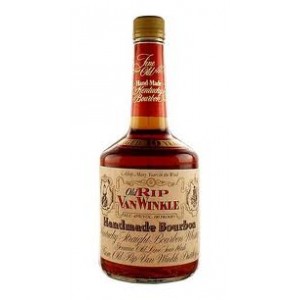
Showing posts with label Van Winkle. Show all posts

Monday, April 4, 2016

How Much Fake Pappy is Out There?


In 2012, the wine world was rocked by the arrest of Rudy Kurniawan, a well known collector of fine wines who was charged with selling counterfeit wine. Kurniawan is currently serving ten years in federal prison, but the scope of his crimes is still not entirely known. His fraud cast a pall over the world of wine collecting that will likely last for years, maybe even decades.

Fake Scotch has been a problem on the collectors' market for years, but could something similar happen with bourbon? Is it happening right now? If you look on ebay, you will see countless empty bottles of valuable bourbons like Pappy Van Winkle selling for hundreds of dollars. Who would pay hundreds of dollars for an empty bourbon bottle? Well, when the same bottle can be refilled and fetch thousands of dollars on the bourbon secondary market, a few hundred isn't much to pay.

Adam Herz, founder of the LA Whiskey Society, has done some deep digging into the counterfeit bourbon phenomenon. He has verified some fakes by matching bottle numbers on empty bottles sold on ebay with full bottles that were later sold on the secondary market. I asked Adam to answer some questions about the world of fake bourbon.


Sku: How much fake Van Winkle do you think is out there?

Adam: Maybe a few hundred in circulation at this point. But consider that there are currently 51 empty Van Winkle bottles for sale on eBay, which isn’t unusual for any given moment…

Sku: How many fake bottles have you verified went directly from ebay to a sale on the secondary market?

Adam: I’ve specifically verified two that have been resold — that may not sound impressive, but you have to understand that the counterfeits in question are nearly impossible to detect, especially just from online photos. But I didn’t need to find a single one to tell you that this is happening and has been happening for a while. The hundreds of past eBay sales prove that just by their existence. Especially since it was the same few eBay nicknames buying up nearly all the bottles.

People who sell their empties keep trying to convince themselves that these literal pieces of trash — that go for $100, $200, $300 — are going to someone who’s gonna' make a lamp. Okay. If there are hundreds of empty Pappy bottles being sold for lamps, where are the hundreds of Pappy Lamps? They’re simply not there.

Sku: Have you seen examples of likely fakes of bourbons other than Pappy Van Winkle? For instance, A.H. Hirsch, the Buffalo Trace Antique Collection or anything else?

Adam: I’ve seen fakes of all kinds of bourbon, from dusty to recent. Refilled A.H. Hirsch and fake BTAC I haven’t confirmed. But I see empty A.H. Hirsch bottles selling on eBay. I think we're at the stage now that single malts were at around 15 years ago, where there were fakes invading the market, but most people were in strong denial. This is the time to learn how to be vigilant against fakes, before you end up with a collection of them.

Sku: How easy is it to make a convincing fake?

Adam: It depends what you’re faking. Pappy products and other recent stuff are very simple to fake. That’s because you can easily buy empties, and then all you have to do is refill the bottle and reseal it. That’s easy with a small amount of online shopping and resourcefulness. If I wanted to sell fake Pappy Van Winkle, I'd be up and running in a few weeks. After I sold my first bottle or two, I’d have recouped my startup costs. After that, all I need are the empties and about a minute per bottle to make it look just like new.

Sku: Are there any tell-tale signs of fakes or is it hopeless to think you can tell the difference?

Adam: I know everyone wants an easy checklist, but it’s more complex than that. In the past few years, I’ve seen over a half million dollars in “street value” of fakes. Most of that's in private collections, but some are in auctions and at retailers. Most of those have been single malts. Some are pathetically easy to identify by “telltale” signs — but only once you’ve got a trained and practiced eye.

You’re going to hear all kinds of crazy theories on how to verify a bottle. Be careful believing any of them. It’s mostly superstition and unsupported guesswork. Just like anyone standing at a craps table, after a while of feeling helpless, people think they can identify patterns where there are none.

The recent fakes — Pappy, Hirsch, etc — you’re probably not going to be able to spot, because they’re genuine bottles with real labels, resealed with identical (or virtually identical) foil or wax. But in general, consider the following:

- Does everything you’re seeing make sense? For instance, is the wear on the bottle even, or is it shiny new foil with a scuffed and worn label? Is everything correct for the time period the bottle is supposed to date from? Is the color of the liquid right? Plain common sense and logic can get you pretty far. Just make sure you don’t veer into tinfoil hat territory — plenty of legit bottles end up with torn labels and nicked foils.

- Do you know the bottle’s history? “Some guy off of Craigslist had it” is not a good history. Even retailers buy on the secondary market nowadays, so unfortunately “It came from retail” doesn’t guarantee authenticity. If a bottle comes from an ABC store in a control state, that’s great. If it came from a store in a non-control state, make sure you know your retailer.

- With vintage bourbon from 1985 and earlier, remember that you can buy tax stamps on ebay and from stamp dealers. Before you get paranoid about that, remember that nearly all the stuff that’s discovered in people’s basements, attics, and so on is going to be legit. But as the hobby continues to boom — and if people don’t stop selling empties on eBay — there eventually will be more dusty counterfeits. That means you need to know the bottle’s provenance. Get the story behind it, and pay attention not just to the answers, but to the way they answer — honestly, evasively, strangely, etc.

- If you can’t see the bottle in person, ask for very specific photos. That can be anything from certain angles to placing two pennies next to the bottle. If a person can’t provide what you specify, then either they’re trying to hide some aspect of the bottle, or they don’t even own it. Ditch the deal.

- The stuff with heat-shrink plastic-wrap over the top is the easiest to refill.

- If it sounds too good to be true, it almost always is.

- No one can authenticate by taste. Maureen Downey, the wine expert who exposed the massive Kurniawan fraud, is fond of saying this. Same thing goes for whiskey. Unless you're doing a true, double-blind comparison of suspected fakes with known legit samples, which never happens, authenticating by taste means zilch.

You’ll hear people who tasted a bottle of some extravagant rare whiskey, they'll tell you, “Oh yeah, it was DEFINITELY the real thing” because it tasted so good. That’s just dumb. I’m sure it did taste great to them, but that doesn’t mean the whiskey is what they were told it was. Even the biggest tasters tend to taste what they want to taste and what they expect to taste.

Sku: Any final thoughts about about the fake problem and what it means for the hobby?

Adam: If people stay aware and stay positive we can fight the fakers. We’ve already had a big impact, and here’s how I know.

In February, I “exposed" the fakes problem on one of the big bourbon forums. The post exploded in popularity, created huge awareness, and many people joined in to help. Eventually they even identified the name, address, and aliases of one of the suspected counterfeiters, and made it clear that the information would be passed to law enforcement.

Cut to now. Many empties on eBay are going unsold, and the ones that do sell go for much less than they did just a few months ago. Compare that to the month preceding my post, when every single empty Pappy posted on eBay was sold for big amounts. That doesn’t happen anymore. Why the big change? I think we scared one of the big fakers out of business. Maybe more than one.

The sad thing is that when I first made that post, some people delighted in trolling and causing trouble. “This is dumb! You can’t do anything!” That sort of stuff. That small but vocal minority is as big of a problem for our hobby, if not more, than the counterfeiters. So be positive and be part of the solution. DON’T SELL YOUR EMPTIES. Don’t let your friends do it and stop others from doing it. Spread the word. Stay vigilant. Don’t be a douchebag. And have fun!

And don’t read this thinking the fakes thing doesn’t apply to you. You’ll be the one who ends up owning the fakes.


Thanks to Adam for taking the time to respond to my questions.


Monday, February 23, 2015

Stupid Pappy Questions


As you all know, Pappy Van Winkle is officially the best bourbon in the world, and...oh, you didn't know that?  Well, it is. It's been declared that by a bunch of very media savvy celebrity chefs, a whole squad of "journalists" and ten thousand internet lists that may or may not have been composed by robots, and we all know how smart robots are...especially about bourbon. Anyway, it's obvious.  You can't find a bottle of Pappy anywhere, so it must be the best.  Even the reliably unexciting 12 and 10 year old Van Winkle bourbons are nowhere to be found.  Pappy has become something like the unholy offspring of Johnnie Walker Blue and a particularly rare Beanie Baby.  It's created an insatiable thirst; well, I shouldn't say thirst, since no one seems to actually drink the stuff but an insatiable desire in everyone from bourbon lovers to folks who wouldn't know E.H. Taylor from Taylor Swift.

In some ways, it's good that Pappy has been officially recognized as the world's best bourbon.  It takes the pressure off folks like me because I know that no one in the general public will pay much attention to my reviews unless I'm talking about Pappy (unless I say something bad about Old Forester Birthday Bourbon - which is apparently a crime punishable by virtual stoning).  It also makes it easy for retailers to sell the stuff they actually have because instead of talking about what it tastes like, they can just say it's like Pappy Van Winkle or, better yet, it beat Pappy in some random tasting. I'm waiting for a new whiskey blogger to rate bourbon on a scale of one to five bottles of Pappy.

But there's a downside as well.  Because many of these new purchasers of Pappy know nothing about bourbon, they have generated a lot of questions.  I get them by email and see them all over the place on-line. They tend to be very detailed questions not about the bourbon or its history, but about the label or its possible value.  While my usual rule is that there are no stupid questions, I fear that when it comes to Pappy, there are no smart ones.  As a service to the new owner of a bottle of Pappy and to save us all a lot of time, I thought I would answer a few of the most common questions right here:


  • The label on my Pappy 15 is slightly askew, does this mean anything?
  • The fill level on my Pappy 20 is higher than on my Pappy 23, what gives?
  • My Pappy has a slightly off white color on the back label.  What does that mean?

This is a category of questions that I call "Is my bottle worth a million dollars?" since that's usually the subtext of the question.  And no, I'm sorry to inform you that your slightly skewed label is not some secret code that this bottle was filled with some superior liquid. Variances in bottling and labeling happen and don't generally improve the quality of the bourbon. However, given the Pappy hype, you probably can sell it to some idiot for a premium if you say it's the special "skewed label" bottle.  Good luck!


  • My bottle doesn't have a laser code.  How can I find out how old it is?

Years ago, I posted a guide to deciphering Pappy Van Winkle bottle codes.  If you can't find a bottle code on your bottle, that means one of three things: (1) it's from before 2007 when they started printing the bottle codes; (2) you aren't looking hard enough (it can be very hard to see against the dark liquid and sometimes hides under the label); or (3) the shyster who you bought the bottle from used a sophisticated method (e.g. Windex and a paper towel) to remove the bottle code and convince you that it was a really old bottle and possibly worth a million dollars.


  • Can you tell me if this bottle is from 2005 or 2006?

Really?  You need to know the exact date of the bottle?  Why?  No, really, why?  I see this type of question all the time and I can't imagine why it matters. There's really not much difference between a 2005 and 2006 bottling in terms of the whiskey. Given that the Van Winkles sometimes bottled enough for more than one release at a time, it might even be the exact same stuff.  Yet still they ask and in great numbers.

I repeat this a lot, but no one seems to want to hear it.  There's no great way to date a bottle from the mid-2000s.  As I noted on my Pappy Van Winkle Timeline, we know that the address on the label changed from Lawerenceburg to Frankfort in 2002 and that the Pappy 15 year old was first released in 2004.  There weren't any significant changes between those dates and 2007 when they started putting the laser date codes on the bottle.  There were some very minor label changes in that period, but exact dates of when they happened are hard to come by.  The Van Winkles didn't keep track of that kind of thing, and as mentioned above, even if someone knows when they bought the bottle, it might not have been that year's release.  With those caveats, based on TTB data, the Old Rip Van Winkle website appears to have been added to the label around 2004, and some say that raised letters on the front label started appearing around 2006 (though I've never seen any confirmation of that date with reliable evidence).


  • Can you tell me where this bottle of Pappy was distilled?

Sure, that's an easy one. It was distilled at Stitzel-Weller...or Bernheim or Buffalo Trace or some combination of those, unless it's really old, in which case it might have been distilled at the Boone Distillery, which no one seems to know anything about but everyone agrees is amazing and probably worth a million dollars.


  • Do you want to buy my bottle of Pappy for a million dollars?

No, but I will trade you for my collection of rare armadillo Beanie Babies.

There you go, everything you wanted to know about Pappy but were afraid to ask.  You're welcome!


Wednesday, July 23, 2014

One Man's Bourbon: The Legend of Van Blankle


As I wrote last week, things were a lot different in the bourbon world just a few years ago. You could buy plenty of stuff off the shelf that you can't find now, including Van Winkle whiskeys.  What's more extraordinary, the Van Winkles even did private bottlings, for retailers, clubs and even for an individual.  One of the most legendary Van Winkle private bottlings was a Van Winkle 12 year old Lot B bottled for Randy Blank, popularly known as "Van Blankle."

Randy Blank had been a fan of Stitzel-Weller bourbon since 1982, when he served Old Fitzgerald Bottled in Bond at his wedding. In 2004, Randy emailed Julian Van Winkle with the idea of doing a private bottling. To that point, the Van Winkles had done bottlings for retailers and bars, but never for an individual. Randy originally asked about a barrel of Old Rip Van Winkle 10/107, but by that time, the ten year old was no longer 100% Stitzel-Weller bourbon, so instead, he went for the 12 year old Lot B.

So it was that in August of 2004, Randy headed to the Buffalo Trace distillery to select his now legendary barrel. He met with Julian Van winkle and sampled from five different barrels of Stitzel-Weller bourbon that had been distilled in March 1992. Since he planned to give a lot of the bourbon away, he was going for an approachable profile and zeroed in on the barrel he thought was "smoother and lighter" than the others. The bourbon was bottled in September of 2004 and yielded 17 cases, many of which Randy gave away to friends and charity auctions. The barrel cost $7,000 which averaged out to a paltry $33 per bottle. The reviews were glowing, often comparing the whiskey to Cognac with its soft, sweet notes. There are only a handful of bottles left, mostly in the possession of Randy and his relatives.  It may not be something most people will be able to try, but if I was going to sample it, I thought it was worth leaving a written record.


Van Winkle Special Reserve 12 year old Lot B (Van Blankle), 45.2% abv

The nose is old dusty bourbon with some medicinal notes. The palate is initially sweet with candy notes, then savory in that distinctly Van Winkle way, fading to slightly medicinal note and a finish with a nice balance of wood and spice.

This is an understated, really wonderful bourbon with a good balance of sweet and spice.  It's very well balanced, and I can certainly see what Randy was thinking when he tapped it as a people-pleaser; the initial sweetness, the spice and the touch of medicinal, savory notes, make it approachable and fun but also complex and interesting.  It's a beautiful composition and is far better than any bottle of the 12 year old Lot B I've tasted.  This one is legendary for a reason.

Many, many, many thanks to Randy for the sample and photos.


Monday, April 14, 2014

The Pappy Van Winkle Time Line


Given the popularity of the Van Winkle whiskeys and the number of detailed questions I see about these bottles, I thought it would be helpful to put together a chronology of the various Van Winkle releases.  I've attempted to list all the key release dates and have also tried to document changes to the appearance of the bottles so that people can better date their Van Winkles.

As you'll notice, this list includes general releases only, not private bottlings, of which there were a number in the early days.  In addition, it deals only with bottle appearance and release dates, not with where various releases were distilled.

Our chronology begins in 1972, the year the Van Winkle family sold the Stitzel-Weller distillery to Norton-Simon but kept the rights to the Van Winkle name.

1972:  Old Rip Van Winkle 7 yo 90 and 107 proof released.

1983:  Old Rip Van Winkle 90 & 107 proof changed from 7 to 10 yo.

1989:  Old Rip Van Winkle 15 released, barrel bottle.*

1990-1992:  Van Winkle 16 and 17 yo released for export only.

1991:  Van Winkle 12 yo Lot A and Lot B released (Lot B would continue).

1994:  Pappy Van Winkle 20 released.

1997:  Old Rip Van Winkle 12 Rye released, barrel bottle.

1998:  Pappy Van Winkle 23 and Van Winkle Family Reserve Rye 13 yo released (Rye might have been released in '97).

1999:  Regular bottles for Van Winkle series changed from (very light) green glass to clear glass.

2002:  Address on Van Winkle whiskeys changed from Lawrenceburg to Frankfort when Van Winkles partnered with Buffalo Trace.

2003:  Second release of Pappy 23 (late 2003/early 2004).

2004:  Old Rip Van Winkle 15 (barrel bottle) replaced with Pappy Van Winkle 15 (regular bottle).

2007:  Digital bottle codes showing date and time of bottling begin appearing on each bottle.

2009:  Old Rip Van Winkle 23 decanter released.

Fall 2011:  Last release of Old Rip Van Winkle 10/90.

Spring 2012:  Last spring release of Van Winkle whiskeys.

2013:  Old Rip Van Winkle 10/107 changed from barrel bottles to regular bottles.

It's harder to pin down this information than you would think, and I had lots of help on this list so my thanks go out to everyone who assisted.  Particular thanks go to the Van Winkles for digging through their records to find some of the more elusive dates.

*"Barrel bottles" are the squat bottles that were used for the Old Rip Van Winkle and Old Weller lines, so called because the base of the bottle looks like a barrel, sort of.


Monday, October 7, 2013

Where can I find Pappy Van Winkle Bourbon?


It's that time of year again.  With fall comes the browning of the leaves, the cooling of the air (well, eventually, we hope), and the Google searches for Pappy Van Winkle.  "Where can I buy Pappy?" is a question I see pop up a lot on Google searches leading to my blog this time of year.  As a public service, I'm going to answer this question for all of the Googlers out there.  This post isn't for my regular readers who know this stuff already, but I will ask them to help out. 

So, you read an article about how Pappy Van Winkle is the best bourbon ever and you think it would make the perfect holiday gift for your spouse/significant other/boss/client.  Here's the deal: Pappy Van Winkle is the most sought after bourbon in history.  Bourbon fans will go to great lengths to hunt it down.  Liquor stores often have hundreds of people on the wait list for two or three bottles and some poor slobs are willing to pay double, triple and, yes, nearly 10 times the retail price for the stuff.

So let's deal with the reality.  If you got to this post, because you Googled "Where can I find Pappy Van Winkle?", you aren't going to find it.  I'm not going to find it.  All but a few tireless or very lucky souls aren't going to find it.  That doesn't have to mean you're out of luck though.  Pappy is great bourbon, but there are plenty of other great bourbons out there that you can find; so if you can't find Pappy (and you won't), consider the following:

  • W.L. Weller 12 year old.  This is essentially the same stuff as much of the Van Winkle bourbons.  It's made by Buffalo Trace, the same distillery that distills all but the oldest Van Winkles, and it's made from the same recipe that they use to make the Van Winkle bourbons.  Buy this and tell that boyfriend that this is essentially Pappy 12.  It's a great bourbon; it won't cost you an arm and a leg ($20 to $25), and you'll be able to feel superior with this bit of insider knowledge.
  •  Four Roses Single Barrel Hand Picked Editions.  Four Roses is probably the most consistently excellent bourbon distillery around today.  These guys pump out great bourbon like it's nothing.  The regular single barrel is good, but retailers hand pick single barrels of particular recipes that range from decent to mind blowingly good.  Binny's currently has eight different hand picked bottles for $55 a piece, a fraction of what Pappy would cost you for juice that's just as good if not better.  To put it in musical terms, Pappy may be as popular as The Knack in 1980 but Four Roses is the Velvet Underground in the early '70s, the life changing band that only those in the know are listening to (check out that rock analogy - eat your heart out David Driscoll!)
  •  High West Rendezvous Rye.  This one's not a bourbon, but a rye, bourbon's spicy cousin. This excellent whiskey is composed of rye whiskeys from Kentucky and Indiana, masterfully blended by David Perkins from High West in Utah.  At $50, it's one of the best whiskey deals around for a fabulous, spicy whiskey.

One thing I have going for me on my blog is an army (okay, a division) of talented readers who know their stuff.  Readers, what would you recommend as a relatively easy to find substitute for Pappy this holiday season?

Monday, May 6, 2013

The Pappy Bubble


Not surprisingly, last week's Bonham's auction featured some pretty ridiculous sales.  Someone, for instance, coughed up $380 for the good but not great Ardbeg Alligator released two years ago for $100 (Keep in mind that Bonham's charges all kinds of fees so the seller didn't make anywhere near $380 but the buyer did pay it).  But what really had me scratching my head was the price for Pappy Van Winkle.  A 20 year old Pappy went for $654 and 23 year olds went for $892 and $773.  Unlike the Ardbeg Alligator, these are bottles that are in current release.  At last fall's release, the 20 year old was selling for $125 and the 23 year old was $240. If you go to places like the new Bourbon Exchange Facebook page (a site apparently set up for those who miss the pleasure of getting gouged on ebay), you will hear similar stories.  Keep in mind, the Pappys listed at the Bonham's auction did not include a date; they did not appear to be older bottles.  They were likely bottles that someone purchased within the last few years for the standard retail price.

This is exhibit one showing that there is a whiskey bubble in the secondary market that will likely collapse sometime in the near future. Currently, you have a situation in which people are willing to pay extraordinary prices for whiskeys like Pappy and the Buffalo Trace Antique Collection that are not truly rare.  They may be hard to find right now, but they aren't rare in the literal sense in that there are plenty of them out there, and they are released every year.  In fact, that's the Beanie Baby model.  The product appears scarce because the company closely controls production and allocation, and in response, people hoard them.  It's very easy for a market like that to collapse.  

As an independent bottler, Van Winkle currently has a limited number of casks available for bottling, but that could change.  Tomorrow, the company could find a way to acquire additional stock allowing it to double production, or Diageo could buy the brand and quintuple production, and pop goes the bubble...no more secondary market.  Some more savvy collectors would still look for certain bottle codes, but that's not most people who are driving this market, as demonstrated by the amount paid for standard bottles in the Bonham's auction.  

Even if production stays at current levels, there will eventually be a crash.  As noted above, the allocations have led to hoarding (just go to any bourbon forum or website and you'll see photos of people's collections of dozens or in some cases hundreds of Van Winkles and BTACs).  The fact that there is so much product out there is going to leave some hoarders holding so many that they will eventually have pressure to unload them.  They will move, lose their job, go into debt...or die, and their massive collections will start to trickle into the secondary market.  Eventually, people will realize that these are not so hard to come by.  And by the way, the same is true of A.H. Hirsch 16 (the most common version with the gold foil cap); even though there isn't new production and it's from a closed distillery, there is a huge amount of it in collectors' hands.  

Preston Van Winkle is none to pleased with the idea of a secondary market for his current products.  As he told me:

As for auctions, I have no problem with people selling true collector bottles, ones that will never see production again or that are truly non-existent at retail. I have a BIG problem with people buying our products purely for profit. It takes away from legitimate fans who just want a bottle to drink. Often times the people who are in it for the gain are the ones who manage to get their hands on large amounts so that makes the problem that much worse.
For my part, I look forward to a market correction which injects a modicum of sanity into this situation. It saddens me to see enthusiasts who had once preached "drinking the juice" now trying to capitalize on Pappy  fever by unloading their bottles at ridiculous prices.  It's especially ironic given Pappy Van Winkle's own creed, that he would make fine bourbon "at a profit if we can, at a loss if we must."  He had his priorities straight.  Maybe we can all take a lesson from the man whose picture is on that $892 bottle of bourbon.


Wednesday, June 13, 2012

More Van Winkle Mania


Earlier this week, Chuck Cowdery wrote a post for the Whisky Advocate Blog about the composition of the next release of Van Winkle whiskeys this coming fall. A few months ago, I interviewed Preston Van Winkle about the 2011 release after an internet kerfuffle broke out over its provenance. We all knew that the stocks of Stitzel-Weller whiskey would not last forever and it appears that this fall's release of Pappy 20 year old will contain Stitzel-Weller blended with wheated bourbon made by Buffalo Trace. Other expressions in the Van Winkle line contain bourbon made by the Bernheim Distillery, now Heaven Hill, which United Distillers used to make wheated recipe bourbon for the Old Fitzgerald and Weller labels after it closed Stitzel-Weller.

For the whiskey geeks among us, it's tempting to get worked up about these issues. As I've stated before, I would like to see a regulation requiring American whiskeys to disclose their distillery of origin on the label, but that's highly unlikely to happen. That being said, there are two things to consider if you find yourself getting obsessed about the composition of the latest Van Winkle bourbon.

First, the cult of Pappy is strong, but Stitzel-Weller bourbon, while good, is not the be all and end all of American whiskey. I've had some great Stitzel-Weller dusties, but I've also had some that were mediocre. There is a uniqueness to some of the older Stitzel-Wellers, but that uniqueness is, in part, about its subtlety and not overly compatible with lots of wood. The best Stitzel-Wellers I've had have been seven to twelve years old. In contrast, I've had some amazing old wheaters made at the Bernheim distillery. If anything, I think those Bernheim wheaters might age better than Stitzel-Weller over the long haul. And of course, Buffalo Trace also makes some great wheated bourbon as part of their Weller line. So given that the Van Winkles are using a combination of whiskeys from those three distilleries for its bourbons, the quality of the bourbon is unlikely to suffer. They could do a lot worse.

Second, bourbon is not single malt. Unless it's bottled in bond, there is no requirement for bourbon to be made at a single distillery, and unless it is made at distilleries in different states, there is no way for the consumer to know at which distillery a non-bonded bourbon was made, particularly one from Kentucky with its many distilleries. When we drink a bourbon from Wild Turkey, Buffalo Trace or Heaven Hill, we assume that it was made at that distillery, but there is no way to know for sure absent sworn testimony by the master distiller. I've heard tell of all manner of contracting arrangements and even bulk sales between distilleries. We all know that, for years, Heaven Hill contracted with Brown Forman to make Rittenhouse Rye, but there may well be similar arrangements that we don't know about. In the end, we may know as little about the composition of any of these whiskeys as we do about Van Winkle.

I like whiskey history and I like knowing what I'm drinking, but in the end, what is most important for those of us who actually drink the stuff (as opposed to "investing" in it) is what's in the glass and how it tastes. In all of our heated discussion, which can be perfectly healthy, we shouldn't lose sight of that fact.


Tuesday, April 10, 2012

Preston Van Winkle: Everything in Pappy 20 and 23 is Stitzel-Weller


Last week, I wrote about the tempest in a bourbon pot regarding the provenance of the Pappy Van Winkle bottlings. The on-line rumblings continued this week with, in the best tradition of the internet, allegations and accusations based on speculation. I finally decided that enough was enough and gave Preston Van Winkle a call, and he spent about an hour answering my questions.

For those of you who don't know, Preston is the great-grandson of Pappy Van Winkle. He and his father, Julian Van Winkle III, run the Old Rip Van Winkle Distillery, which is a whiskey bottling company. In talking with him, I got straight to the point:

Regarding the issue that seems the most controversial on-line, the provenance of Pappy Van Winkle 20 and 23 year old, Preston was clear, "Everything in the 20 and 23 is Stitzel-Weller." I questioned him on the details and he was adamant that all of the whiskey was distilled at Stitzel-Weller in Louisville and there is nothing else in those bottles. Preston noted that there aren't any other barrels of that age that would even fit the bill. The Van Winkles began sourcing Stitzel-Weller bourbon from the distillery after the family sold it in 1972. They did so until the distillery closed in 1992. The barrels were moved to the Buffalo Trace warehouse a few years ago. Preston was there and saw them move the barrels.

With regard to the Van Winkle Family Reserve Rye, the very first run of that rye, back in the '90s, was entirely from the Medley Distillery and was released in both 12 an 13 year old expressions. That run quickly sold out and since then, the Van Winkle Rye has come from a marriage of Medley and Bernheim (Cream of Kentucky) rye that was purchased by Julian years ago and has been in stainless steel tanks. Buffalo Trace is aging rye to replace the Medley/Bernheim blend when it runs out, but Preston thinks there are probably a few more years of that tanked rye left.

With regard to statements by Buffalo Trace's Harlen Wheatley that were reported on the StraightBourbon forum, Preston was clear that while he would answer any of my factual questions, he would not specifically comment with regard to what may or may not have been said by Wheatley. He wasn't there, and he didn't hear it, so he didn't feel comfortable commenting on it.

Given that I had Preston on the phone, I took the opportunity to ask a few more details about these whiskeys beyond those that have been controversial.

For those who have wondered about the hand written numbers on the bottles of rye, they really don't mean much anymore. The best way to determine the date of the bottle now is to use the laser code.

Of course, the stocks of Stitzel-Weller will eventually run out. According to Preston, the 20 and 23 year old versions of Pappy Van Winkle have generally been right at that age and have not contained older whiskey. Doing the math from a distillery closure in 1992, this means that this could be the last year that Pappy 20 is Stitzel-Weller (this is my formulation, Preston said that was possible, but he would have to check to know for sure how much was left), while the 23 year old may still have a few years left.

I asked if there were plans for any more special bottlings such as the 23 year old decanter released a few years ago. He said there were no plans because they didn't have enough whiskey to do that. The decanter was the product of having extra stocks of the 23 at that time, so they selected the best ten or eleven barrels for the special release.

I asked about the process for selecting bottles for whiskeys that are made by Buffalo Trace, like the Old Rip Van Winkle 10 year old. Preston said that they are selected based on warehouse position and placement. Barrels of wheated bourbon in particular areas of the Buffalo Trace warehouse fit the Van Winkle flavor profile. There is a tasting panel at Buffalo Trace which starts with their lab staff. Every barrel that goes into a Van Winkle bourbon is tasted by Preston or his father, and often both of them. They taste them watered down to 60 proof, and yes, they spit. Preston mentioned that they were "thrilled" with the Buffalo Trace distilled Van Winkle whiskeys, such as the ten year old Old Rip Van Winkle.

As to all the on-line commotion, Preston said he appreciates the enthusiasm for his products on the internet but bristles at those who would question his integrity or that of his family. "There is no smoke and mirrors," he told me, "no misleading people for the benefit of profit." He referenced the old saying of Pappy Van Winkle, "We make fine bourbon, at a profit if we can, at a loss if we must, but always fine bourbon," and added, "and that's the way we've always done things."


Sunday, April 1, 2012

Tempest in a Bourbon Pot: What did Harlen Wheatley Say and When did he Say it?


There was a great to-do in the bourbon-geekdom world last week when a member of the StraightBourbon forum posted a report of statements made by Buffalo Trace Master Distiller Harlen Wheatley at a tasting. Among the most controversial was a comment that Pappy Van Winkle 20 year old is "fully [Buffalo Trace] Juice" and that Pappy Van Winkle 23 may be at least partly Buffalo Trace bourbon. He also stated that the Van Winkle Family Reserve Rye had been entirely made by Buffalo Trace for the past two to three years. Most people had believed that the Pappy Van Winkle 20 and 23 year old bourbons were still made entirely made from whiskey which had been distilled at the now closed Stitzel-Weller distillery. The Van Winkles have a partnership with Buffalo Trace which supplies them with much of their bourbon and bottles their product, and it's long been known that the younger Van Winkle bourbons are distilled by Buffalo Trace.

Like everything having to do with Pappy Van Winkle, the reaction was outsized. Posters expressed anger, felt betrayed and became cynical. Hell hath no fury like a Van Winkle drinker scorned, and plenty acted like they had been spurned by a lover. For my part, I don't really care, and here's why.

First, I've never been a Van Winkle partisan. I like the bourbon well enough, but I've never bought into the crazy hype surrounding each release. I'll taste them and enjoy them if the opportunity comes along, but I generally avoid the Van Winkle line and its high prices.

Second, we don't know the veracity of these claims. I have no reason to distrust the poster, but these were statements made at a bourbon tasting. I'm sure Wheatley was speaking to the best of his knowledge, but these were off the cuff musings, and I have no idea what he knows or how much control he has over the Van Winkle line of products. His statements appear to contradict other statements he made a year ago on the K&L Spirits podcast where he said he thought that Pappy Van Winkle 20 and 23 year old were "probably still all Stitzel-Weller." (The podcast is available here; the statement is made at approximately 24:30) Preston Van Winkle also stated on a K&L podcast last November that "the older two [Van Winkles], the 20 and 23 year are still coming from stocks that were made at Stitzel-Weller." (The podcast is available here; the statement is made at approximately 14:30).

Now, there has been a tendency on the forum to engage in close readings of these statements as if Wheatley was a prophet of some sort. He's not. I'm also guessing that he doesn't care what the composition is of these bourbons. Let's all do our best to stay grounded and remember that the number of people who do care about this issue is microscopic, even among fans of Van Winkle bourbon. This is major inside baseball. Rather than being the result of some conspiracy or misinformation campaign, I'm guessing that some of these contradictions are due to these issues not being very important to Wheatley or the Van Winkles.

Third, it would also behoove us to remember that Van Winkle is not marketed or sold as a Stitzel-Weller bourbon. Unlike Jefferson Presidential Select, the Van Winkle bourbons do not advertise themselves as Stitzel-Weller bourbon. You won't find that claim made anywhere on the bottles or in any press release. To the extent that statements have been made by Wheatley or the Van Winkles as to the provenance of the bourbon, it has usually been in response to questions from bourbon geeks. Now I've always been of the opinion that whiskey bottlers should fully disclose who distills their bourbons, but it's hard to fault the Van Winkles any more than any of the countless other bottlers that do this.

As to the Van Winkle Rye, statements from the Van Winkles had indicated that this rye was initially a blend of ryes from the Medley and Bernheim distilleries, but it was always supposed to transition to Buffalo Trace distillate, so that revelation was not surprising to me.

It's always fun to speculate about things like age and provenance and it's a time honored tradition in the whiskey world (Finlaggan anyone?), but the hard truth is that if it's not on the label, we just don't know for certain. By not listing a distillery on the Pappy label, the Van Winkles have the flexibility to alter the composition without notice. I would urge them to come clean and make a definitive statement, but I'd also urge the rest of us to stop worrying and learn to love the bourbon.

Tuesday, March 27, 2012

Poll Results: Pappy vs. BTAC


It looks like the Buffalo Trace Antique Collection wins the poll that pitted it against the Van Winkle line.  The results weren't quite as one sided as our Irish vs. Canadian poll, but BTAC still won handily.  I received votes in the comments section, on Twitter and by email. 

Readers who picked BTAC mentioned both variety and price, and many thought it was an easy answer.  Commenter James opined, "You might as well ask people if they prefer receiving a million dollars (tax free) or a kick in the crotch."  As AaronWF said, "Honestly, I think I'd take the Van Winkle and just hoard all the old-stock [Van Winkle Family Reserve Rye] until it's gone."

But Van Winkle had its defenders, particularly those who thought it was worth getting Stitzel-Weller and the current Van Winkle rye even if those stocks will eventually run out.


It's interesting that BTAC won the day on this given Van Winkle's outsized reputation.  It's true that BTAC has variety on its side, you get a wheated bourbon, two rye recipe bourbons and two straight ryes.  With Van Winkle you get six wheated bourbons and one straight rye.  I was surprised that no one lamented the lack of cask strength Van Winkles in their response, which is another advantage of BTAC. 

Still, given that Stitzel-Weller is one of the most loved of all distilleries, I'm surprised Van Winkle didn't get more votes.

Thanks for playing.  If you have an idea for a future poll, let me know.

Monday, March 26, 2012

Reader Poll: Buffalo Trace Antique vs. Van Winkle

Okay, here's a new whiskey poll for all of my American whiskey fans. This week's hypothetical scenario is as follows: because of the shortages and general craziness around the regular releases of Buffalo Trace Antique Collection and the Van Winkle line of bourbons and the frequent complaints from both consumers and retailers, Buffalo Trace and the Van Winkles have decided that everyone can choose access to one, and only one of these collections.

You have one chance to make a choice, and once you do, it's for life. You can't switch. Once you choose, you will have access to each expression in the release and can buy as many as you like. Assume for the purposes of the poll that no new expressions will be added, however, as in real life, we know that stocks of Stitzel-Weller are finite, so eventually, the Pappys that still use Stitzel-Weller bourbon (the 20 and 23 year old) will be switched to Buffalo Trace distillate.

Just to review, here are the bourbons you will have access to.

If you pick Buffalo Trace Antique Collection: George T. Stagg, William Larue Weller, Thomas Handy Rye, Sazerac 18 year old rye, Eagle Rare 17.

If you pick Van Winkle: Old Rip Van Winkle 10 year 90 proof, Old Rip Van Winkle 10 year 107 proof, Van Winkle 12 year Lot B, Van Winkle Family Reserve Rye and Pappy Van Winkle 15, 20 and 23 year old (Sorry, no Old Rip 23, that was a limited release).

So, which will it be? BTAC or Van Winkle?

Thursday, March 22, 2012

Dusty Thursday: Old Rip Van Winkle Decanters (1970s)

When I was a kid, I remember going with my dad to our local Liquor Barn superstore. He would be grabbing some basic stuff, but I would head immediately to the decanters. There was a whole aisle of porcelain containers in wonderful colors and shapes. I remember turkeys and other game birds, old men and even Elvis bottles. These decanters are now collectibles in their own rights, but they can also contain good whiskey. A frequent commenter on the blog was kind enough to send me some samples from two Old Rip Van Winkle decanters he found.

These decanters of Old Rip Van Winkle are wheated bourbon from the Stitzel-Weller distillery. They are both 86 proof and seven years old, with the likely year of bottling noted on the bottom of the decanter. The picture with the blue box is the 1977. They are both four-fifth quart bottles (i.e. a "fifth" in the pre-metric parlance because it was equal to one-fifth of a gallon).


Old Rip Van Winkle Decanter 1975, 86 proof (43% abv), 7 years old.

On sniffing it, you get that lovely, classic Stitzel-Weller nose with all of its candy shop notes. The palate, though, starts on a bitter note, excessively woody with pine and oak beating up the candy plus a sharp acid on the way down. The finish on this one is back to classic notes with lots of vanilla.


Old Rip Van Winkle Decanter 1977, 86 proof (43% abv), 7 years old.

The 1977 Old Rip has less on the nose than the '75. There are some medicinal notes but none of those classic notes. The palate on this one is an improvement with a decent balance of sweet and oak as well as some of those candy notes that are retained in the finish.

Neither of these decanters offer the best that Stitzel-Weller can offer, though both have glimpses of it. The 1975 was stronger on the nose while the 1977 was stronger on the palate.

WARNING: After drinking this, I did some research and it seems that whiskey from old ceramic decanters can have a significant lead content. Please keep this in mind and be cautious when sampling from dusty decanters. Gee, maybe I should have done that research before I sampled them. Oh well, it's the least I can do in support of the cause of whiskey blogging.

Tuesday, February 14, 2012

Battle of the Pappys

As fans of Pappy Van Winkle know, the 2011 fall release marked the first year that the vaunted Pappy Van Winkle 15 year old was distilled entirely by the Buffalo Trace distillery. Earlier Pappys were made from old stocks of what is left of the bourbon from the Stitzel-Weller distillery (though it's not clear if some of those old stocks included Buffalo Trace bourbon blended in as well). The 20 and 23 year Pappy are still from Stitzel-Weller stocks though eventually, those will run dry as well.

I've written about the Pappy flap before, but I have yet to taste old and new Pappys side by side. Today I'll compare the 2008 release and the new, fall 2011 Buffalo Trace Pappy. Jason Pyle did a similar comparison on his excellent Sour Mash Manifesto, and hey, I know a good idea when I see it, so I'm going to shamelessly copy him.


Pappy Van Winkle 15 yo 2008, 53.5% abv

The nose on this begins with pure maple candy, then some citrus notes with just a touch of oak. The palate is really delicate with layers of candy, oak and a touch of orange. The finish is candy sweetness with just a bit of tartness. This is the standard Pappy profile I've come to know, sweet with a dose of oak and some citrus. It's well balanced and delicious.


Pappy Van Winkle 15 yo Fall 2011, 53.5% abv

The nose on this is much oakier than the '08. It's pleasant but pretty much a one-noter. The palate starts with a rich vanilla then fades to a more oaky, just slightly bitter vanilla, like the crust on a creme brulee. It's got a nice chewy mouthfeel that trails off into an oaky/vanilla finish.


Pappy vs. Pappy

These are two quite different whiskeys, but both are very good. You can definitely taste the transition from Stitzel-Weller to Buffalo Trace. The 2008 Pappy has that candy/oak balance that I associate with Stitzel-Weller. It's more delicate and has a more complex flavor profile.

The 2011 is much more similar to the bourbons in the current Weller line, almost like a lower strength William Larue Weller. It's much bolder than the 2008 Pappy, coming at you with big oak and a chewy mouthfeel, but it lacks the layers of flavor that you get in the earlier version.

Comparing these two I'd have to say I think they are of equal quality though very different in flavor profile. I can understand those who mourn the last of the Stitzel-Weller Pappy because those Stitzel-Weller whiskeys have a fairly unique flavor profile. Their delicacy and complexity is not something that you see in the market today. The boldness of the Buffalo Trace version is great, but it may not be worth the extra cash for Pappy when you can get similar Wellers for a comparable or lower price.

All good things must come to an end, and that includes Stitzel-Weller bourbon, but I think the Van Winkles have done well by their brand with the new version, even if it's not the same as the old.

Monday, November 21, 2011

Pappy Van Winkle: Know Your Bottle Codes

It's Pappy time! That crazy time every fall when the Pappy Van Winkle's get released. Pappy Van Winkle, of course, is one of the most prized regular releases for bourbon lovers. The Van Winkle family, of the late Stitzel-Weller distillery, are known to have a diminishing number of barrels of that prized Stitzel-Weller bourbon. Along with those barrels, they also bottle whiskey made at Buffalo Trace (and their rye comes from a variety of sources).

Of late, there has been much controversy about which bottles of Pappy are Stitzel-Weller and which are Buffalo Trace. There doesn't seem to be much doubt that the 20 and 23 year old Pappys are still made from Stitzel-Weller bourbon, but there has been a lot of back and forth about the 15.

Pappy 15 is the most affordable and some think the best of the Pappy line (which also makes it the hardest to get). Based on statements made by the Van Winkles a few years ago, it sounds as if they made a big (and possibly final) run of Pappy 15 bottles from Stitzel Weller in 2009 that held them through the spring 2011 release. This fall, according to this K&L interview with Preston Van Winkle, the Pappy 15 is bourbon made at Buffalo Trace.

But suppose you happen to find a bottle of Pappy on a dusty shelf somewhere. How will you know whether it is the old Stitzel Weller or the new Buffalo Trace version? The answer is in the bottle code. If you have ever visited Tim Puett's Ardbeg Project site, you know about bottle codes. They are codes placed on each bottle that show the time and date of the bottling and they can help you distinguish between different releases of the same whiskey. Tim has demonstrated huge differences in, for instance, the Ardbeg 10 over the years, but you can't tell when the whiskey is from without knowing the bottle code.

Buffalo Trace uses a similar code which can tell you the year your Van Winkle (or your Stagg, Weller, etc.) was bottled. The code is a very small digital stamp that appears on the bottle, usually below the back label. Here's how to read it using two examples:

Example 1: K0780907:21

Example 2: N3001114:13

The first letter is the bottling line at Buffalo Trace; example 1 was the K line, and example 2 was the N line. I don't know enough about the bottling there to know if there is any real significance that can be gleaned from the bottling line.

The second three digits indicate the day of the year that it was bottled. So example 1 was bottled on the 78th day of the year and example 2 was bottled on the 300th day of the year.

The third two digits indicate the year - this is really the most significant piece of information. The "09" on example 1 indicates it was bottled in 2009, so if it's Pappy 15, it would likely be from the old Stitzel-Weller stocks. Example 2 has an "11" which indicates 2011 when they started using Buffalo Trace bourbon.

The final four digits are the bottling time on a 24 hour clock, so example 1 was bottled at 7:21 am and example 2 was bottled at 2:13 pm (14:13).

If you love your Pappy and your BTAC and especially if you go dusty hunting for older versions, it pays to know your bottle codes.


UPDATE (March 2012)

For the Spring 2012 release, it appears that the order of numbers has switched. In the comments below, a reader gave this example of a bottle code: b1204011:11k.

I would interpret it this way.

The first letter indicates it was bottled at Buffalo Trace. The first two digits are the year, so "12" means bottled in 2012. The second three digits are the day of the year, so "025" means the whiskey was bottled on the 25th day of the year, which would be January 25th. This would be consistent for the spring 2012 release. The last four digits are the time of bottling, in this case, 11:11.  The last letter is the bottling line.


UPDATE 2

Bottle codes did not start appearing on bottles until 2007.  For hints on dating a pre-bottle code Van Winkle, see my Pappy Van Winkle Timeline.


Wednesday, October 19, 2011

Important Customer Notice: Buffalo Trace Antique & Pappy Van Winkle Distribution


Dear Valued Customer,

We at Sku's Great Big House of Liquor do our level best to try and please each and every customer. In fact, our spirits directors, the Steves, will be travelling to Mexico next month to procure a specially selected, single barrel, cask strength, unfiltered, port-finished Tia Maria, even though we wrote in our blog last week that not everything should be cask strengh and unfiltered, and aren't we losing some amount of whiskey tradition by placing these demands on our spirits, and what is the purpose of drinking in our culture, and do we prove our importance or even our existence through drinking certain whiskeys and what are the sociological implications of that anyway, isn't drinking, like language itself, a mere construct? But I digress...

Unfortunately, it is simply not always possible to please the neurotic, OCD, border line paranoid-schitzophrenics who make up our dedicated customer base. We already have 10.5 million people on our standby list for the Buffalo Trace Antique Collection and the fall releases of Pappy Van Winkle. We have just been notified by Buffalo Trace that we will only be getting one bottle of each of these, so there will, unfortunately, not be enough for everyone. Therefore, we have come up with what we think is a fair way to distribute these very coveted bottles.


Step 1: Lottery. We will pick 150,000 names out of a hat. This will involve the procurement of a very large hat.

Step 2: Quiz. Each of the people who are picked out of a hat will be sent a detailed quiz about these bourbons. Please be familiar with the mashbills, provenance, romantic histories of the various brand ambassadors and other characteristics of these whiskeys.

Step 3: Triatholon. The 10,258 best scorers on the quiz will compete in a triatholon.

Step 4: Cage Match. The top two competitors in the triatholon will engage in a cage match. The winner of the cage match will get the bottle. If it is a tie, the tie will be broken by a game of backgammon.

Remember, you can sign up for more than one bottle, but you will have to participate in each step for every bottle you sign up for, even Eagle Rare 17.

The good news is that everyone who participates gets a free bottle of Rain Vodka!

Good luck and let the games begin. And thank you for choosing Sku's Great Big House of Liquor.

Tuesday, March 2, 2010

Whiskey Wednesday: Battle of the Really Expensive 23 Year Old Van Winkles

A few months ago, I reviewed the new Jefferson Presidential Select Bourbon and talked about the cult of wheated Bourbon from the old Stitzel-Weller distillery. Little did I know that the Stitzel-Weller cult was just getting started. Shortly after the release of the Jefferson Presidential, the Van Winkles, heirs to Stitzel-Weller, announced the release of the new 23 year old Old Rip Van Winkle Bourbon. While it did not say so explicitly, Van Winkle leaked news that the 23 year old was made with whiskey from Stitzel-Weller.

The new Bourbon is remarkable, not just for its pedigree, but also for its look and price. Mimicking some of the recent high-end Scotch releases, the Old Rip Van Winkle is packaged in a large, leather-lined wooden cube that's almost big enough to qualify as furniture. It is bottled in a crystal decanter, made by the Scottish Glencairn Crystal Studio, known for their high-quality whiskey glasses, and comes with two rocks glasses also made by Glencairn. Why they included rocks glasses instead of tasting glasses, I don't know. The retail price is a whopping $350, though it's up to $400 at some stores. This is certainly the highest priced Bourbon I have seen on the retail market. Though, to be fair, it is priced comparably to similarly aged Scotches from closed distilleries like Brora and Port Ellen.

Curiously, Van Winkle has long had another 23 year old Bourbon on the market that is made from old Stitzel-Weller stocks. The Pappy Van Winkle 23 year old Family Reserve is expensive, but coming in at the $220 range, it is more than $100 cheaper than the new release. So what is the difference between these two 23 year old Stitzel-Weller whiskeys? Well, on the surface, other than the packaging (the Pappy is modestly bottled in a little cloth bag), the main difference is that the Old Rip is higher in alcohol. Of course, the only real way to tell the difference is to taste these babies, so here we go.

TASTINGS

Pappy Van Winkle Family Reserve 23 year old
47.8% alcohol (C series).

The nose on this is very Van Winkle with a bit of heat to it, slightly spicy almost as if it had rye, which it does not. The first taste you get is sweet, followed by a bit of heat. The overall taste is a bit flat. This isn't as well rounded or as complex as the 20 year old version of Pappy, though it has a few of the savory notes.

Old Rip Van Winkle 23 year old
57% alcohol, not chill-filtered


The nose on this is beautiful. It's sweet, it's caramel with bits of oak, like walking in an enchanted candy forest. The aroma is lush and complex; the Pappy is much lighter in aroma. Flavor - they nailed this one. Sweet yields to savory with that chewy, aged Zinfandel mouthfeel. Waves of flavor wash over you, gone before you can name them. Trying to pin it all down I get big wood, wine and some citrus; at the end of the palate you get the sweet corn. Water brings out sweeter notes, but as with most whiskeys, I prefer Old Rip neat.

Going back to the Pappy after tasting the Old Rip is inadvisable. It tastes weak and one dimensional in comparison.


THE VERDICT

The Old Rip 23 is a lovely whiskey, while the Pappy 23 was very disappointing. Is the Old Rip worth the big price tag? Well, that's hard to say, but it is a great whiskey, and compared to other great whiskeys from closed distilleries, I don't think you can call it overpriced. Of course, there are other great Bourbons that are much more affordable. The William Larue Weller that I reviewed last year is another phenomenal wheated Bourbon for about one-fifth the price of the Old Rip. If you love wheated Bourbon and you don't mind spending a good wad of cash to try an old Stitzel-Weller, I would definitely recommend the Old Rip. Now if I only knew what to do with an large, empty, leather-lined wooden box, I'd be all set.

Tuesday, January 26, 2010

Whiskey Wednesday: Van Winkle Rye

It's time for some rye! Van Winkle rye, made by Julian Van Winkle in conjunction with the Buffalo Trace distillery, is a popular rye whiskey that has been hard to find in Southern California. Lately though, there is some Van Winkle on the shelves at premium liquor shops. I'm a big fan of Buffalo Trace's other ryes: Sazerac, Sazerac 18 year old, and Thomas Handy, so I figured I would try the Van Winkle. Julian Van Winkle sources his own whiskey, and this is thought by many to be a blend of ryes from two distilleries: Bernheim and Medley, though we don't know for certain and it could also be made by Buffalo Trace. (Note to whiskey geeks, this is one of the new "A" series bottles).

Tasting

Van Winkle Family Reserve Rye, 13 years old, 47.8% alcohol ($70)

The first whiff of this stuff is Bourbony sweetness, they you get flooded with the strong rye spice. The flavor flips that formula on its heads with rye spice in the forefront and a bit of bitterness, followed with some sweetness that lasts into the finish, hand in hand with the bitter. This is a bit less rounded than Buffalo Trace's other ryes and the sweetness and spice feel less integrated, but it gets points for a solid and complex rye flavor. If they could tame the bitter edges, this would be amazing stuff.

Tuesday, August 4, 2009

Whiskey Wednesday: Van Winkle Lot B

This week's whiskey is another from the popular Van Winkle series. As you may recall, I tasted Pappy Van Winkle 20 year old last year. The 12 year old Van Winkle, also known as "Lot B" is very popular among Bourbon enthusiasts.

While they are both under the stewardship of Julian Van Winkle and are both wheat recipe Bourbons, the Lot B and Pappy likely were produced by different distilleries. The Pappy 20 year old is still composed of whiskey made at the old Stitzel-Weller distillery which closed in 1991. While it's not totally clear that the 20 year old is 100% Stitzel-Weller Bourbon, that is the common assumption. Van Winkle Bourbons younger than the 20 year old Pappy were distilled at Buffalo Trace which now produces the whiskey under Julian's guidance.


Tasting

Van Winkle Special Reserve, 12 years old, Lot "B", 45.2% alcohol ($55)

A nice aroma on this one, full bodied and forceful on the nose with some savory, meaty notes and a wee bit of nail polish in the background. A good savory follow-up on the taste; it's an umami whiskey. I like the Van Winkle series, in general, because it challenges the assumption that wheater means sweeter. It hasn't developed the chewiness of the 20 year old yet, but you can see it going in that direction. Late palate there is a bit of acid which closes out a very nice Bourbon.

I'm not sure I am as enthusiastic about Lot B as many in the Bourbon world, but like the older Van Winkles I've tried, it is a good complex whiskey that deserves pondering over.

Tuesday, August 19, 2008

Whiskey Wednesday: Born in the USA Part 3 - Jump on the Pappy Van

Under federal regulations, Bourbon must be made from a mix of grains composed of at least 51% corn. What is in the other 49% is up to the distiller. Usually, the corn content is quite a bit higher than 50% and the remainder is filled in with some mixture of other grains (rye, barley (malted and un), wheat, etc.).

In most Bourbons, rye is the major secondary grain. You can really taste this in a Bourbon like Buffalo Trace, which has a strong rye kick to it. In others, a smaller but distinguished group, the major secondary grain is wheat. Known as wheaters by aficionados, these Bourbons replace the strong spice of rye with the subtle sweetness of wheat.

Makers' Mark is probably the most widely known of the wheaters, but among the most loved is the Van Winkle series, made by Buffalo Trace, including Old Rip Van Winkle and Pappy Van Winkle Bourbons.

Like many Bourbons, Van Winkle has a rich heritage. It is named for Julian Van Winkle, an elder statesman of the now closed Stitzel-Weller distillery which produced WL Weller Bourbon, which is also now produced by Buffalo Trace. The Van Winkle Bourbon is still made in conjunction with the family.

The Van Winkle line includes Old Rip Van Winkle 10 year old and 10 year old 107 proof, Van Winkle 12 year old, Van Winkle Family Reserve Rye Whiskey and Pappy Van Winkle Family Reserve 15, 20 and 23 year olds. I tried the Pappy Van Winkle 20 year old.

Tasting

Pappy Van Winkle Family Reserve, 20 year old (Buffalo Trace), 45.2% alcohol ($70-$80)

The Pappy nose has lots of alcohol for its relatively low abv. Overall, the aroma was not very assertive. Very nice flavor with, indeed, no rye spice in evidence. Still, it's less sweet than I expected. There is an acidic, almost tannin like flavor to it that gives it a bit of a bite and the effect of a well aged Zinfandel, the type of wine that is almost chewy. Sweetness emerges only in quick glimpses. It's more savory than sweet which differentiates it from many other Bourbons in the Buffalo Trace line. This characteristic also flies in the face of the commonly held notion that wheaters are always sweet.

This is a Bourbon that conflicted with my expectations in many ways. The lack of pronounced sweetness, the wine-like qualities and the lack of rye gave it a different flavor profile than most other Bourbons I've had. An interesting whiskey indeed.

So find a bottle and jump on the Van.